Trafalgar Entertainment announces exciting panto partnership with Imagine Theatre

Trafalgar Entertainment announces exciting panto partnership with Imagine Theatre

Trafalgar Entertainment (TE) – the international live entertainment business founded by Sir Howard Panter and Dame Rosemary Squire – has announced details of an exciting new partnership with Imagine Theatre – one of the UK’s biggest pantomime providers.

Read More

Why there are no Junior Ensembles in many of our Pantos this year

For us, panto is all about family and it’s all about children. It was our own experiences of watching or being in pantos as children which shaped our desire and passion to work in the world of theatre and pantomime. That’s why we work so hard to create as many opportunities for children to perform in our productions as we possibly can.

But for now, whilst our shows are still planned to run as normal, COVID has sadly put a pause on children appearing in many of our shows, and we wanted to explain why.

Throughout the pandemic, everyone’s focus has been on health and wellbeing, and as we move into what we all hope are the latter stages of this crisis, that doesn’t change. Our absolute priority is the wellbeing and health of everyone who will work on, be involved in, or watch any of our productions this year.

A huge amount of work is going on behind the scenes to deliver a spectacular pantomime season this Christmas, but as we are sure you will appreciate, there will be some amendments and changes which must take place due to the current situation.

A very wise dance teacher friend of ours once said to us “never dance on an injury until it has fully healed.” We see COVID as a very similar thing – we can’t just ‘flick a switch’ and this will all go away. There are aspects of our pantomimes which can and will be back this year, but other parts require a little more ‘healing’ time until they can safely return, and our junior ensemble is one of those.

Pantomimes take many months to plan and develop. It takes around 17-months from the start of planning a show until closing night, and each element of the production is meticulously planned. This includes the casting and inclusion of children for our junior ensembles.

The pre-planning and up-front work that takes place before the audition days is enormous. We must plan rehearsal and performance schedules (including working out school time missed), undertake the interviewing, recruitment, and reference checking of chaperones, planning of performance licenses, obtaining DBS and PVG checks, updating safeguarding procedures and policies and then the administration set up and roll out of the actual audition days themselves.

Every year, we audition many thousands of children the length and breadth of the UK. Of these, many hundreds are offered the chance to appear in one of our productions. We also work with dozens of chaperones, all of whom take care and responsibility for these talented young people. The children appear in teams of either eight or ten in each production (some shows have 2 teams, some have 3, meaning we cast between 16 and 30 children per production), accompanied by at least two chaperones.

Once the auditions are completed, this is then followed by weeks and weeks of work in obtaining performance licenses for those who have been successful (as every child appearing in the show must be granted a license by their local council to perform), the fitting of costumes and all the background work we have to undertake, including preparing chaperone files, reports and so much more.

This year, in addition to all our usual preparations, things are just that bit more complicated. There are so many elements we must consider what would never usually factor. For example

  • What are the rules and regulations we would need to follow at audition days? Sometimes with all the auditionees and adults accompanying them, plus the Imagine and venue teams we can have upwards of 500+ people present in the audition buildings at any one time. Whilst unlocking is moving forwards well, this is still a huge amount of people to hold in one place, especially as some parts of the UK (Scotland and Wales in particular) may only just have fully unlocked when their auditions are due to take place.

  • Will we be able to even obtain licenses for children to be released from school for rehearsals and performances when they have missed so much schooling due to the pandemic? Some children may have missed weeks of schooling and the authorities may take the decision not to issue licenses to allow them to miss school for rehearsals and performances.

  • Will children still be in bubbles at school? How do we bubble our junior ensembles when they all potentially come from different schools and different year groups? Current indications are that the bubbles may be removed, but not for all parts of the UK and we still await full guidance.

  • How long will the licenses take to obtain when so many council staff are working from home or are only just returning into offices? (We have been warned it may take up to 4 weeks longer than usual in some locations, making it impossible to have them granted in time.)

  • Will there still need to be social distancing backstage? Or even if the rules state not, will we opt to keep it in place? Many theatres have extremely limited dressing room space with cramped backstage corridors and tight stage wing areas. As such it would be challenging to socially distance or sensibly separate the casts, crew and junior ensembles. The junior ensembles tend to share one dressing room, making social distancing impossible.

  • The children will be mixing with potentially thousands of other children every day at school, and at the time of writing this, schools have been where the virus is spreading the most. Without any government backed cancellation insurances, should one of the children pick up COVID at school, and come to the theatre, this would impact on others within the production and may affect the running of the production. Whilst we know that fully vaccinated adults almost certainly won’t have to isolate, there is currently no clarity around potential vaccinations for children, how isolation might work for them, what the rules are moving forward and how all of that might affect the show.

  •  As part of our risk management, we have to consider the production as a whole from a health and safety and financial perspective. At present there is no clarity around a government backed cancellation insurance scheme to enable productions to continue should any performer or worker have to leave at short notice due to either a positive test or being requested to self-isolate. Therefore, our priority has to be to keep the production itself up and running, minimising risks to backstage staff and performers by keeping the number of people working on the show to an absolute minimum.

  • Finally, we have to consider ‘costume sharing’. Whilst children have all their own underwear for the show, they do share their main costumes. With the current situation, we have to consider this and the impact of it.

Our problem is that we can only work with the information we have at any one time. At the time of writing this blog (early August 2021) whilst theatres in England are reopen at full capacity and we are also starting to see reopening’s in Wales and Scotland there are still so many unanswered questions, and we have to make certain decisions now. So, in short, what that means is time has run out. We just don’t know what the rules and regulations we’re going to be working with are, and how to safely get children into the show. Therefore, it’s impossible to prepare and be ready in time.

Bearing this in mind, and after lengthy discussion and careful consideration with theatre managements, we’ve had no option but to make the heart-breaking decision not to feature young performers in many of our 2021 Imagine Theatre pantomimes. It’s not a decision we’ve taken lightly, and one which is playing very heavily on our hearts and minds.

We are so sorry, as we understand the impact that this will have and how many disappointed children there will be this year.

We promise that, as soon as things get back to ‘normal’, children will return to our shows. We can’t wait to see lots of smiling, excited faces at our next set of junior ensemble auditions. Watch this space!

With very best wishes,

Sarah and Steve Boden

Imagine Theatre

20210504_120709918_iOS.png
 

FIVE STAR CASTING FOR WOLVERHAMPTON GRAND THEATRE PANTOMIME, CINDERELLA!

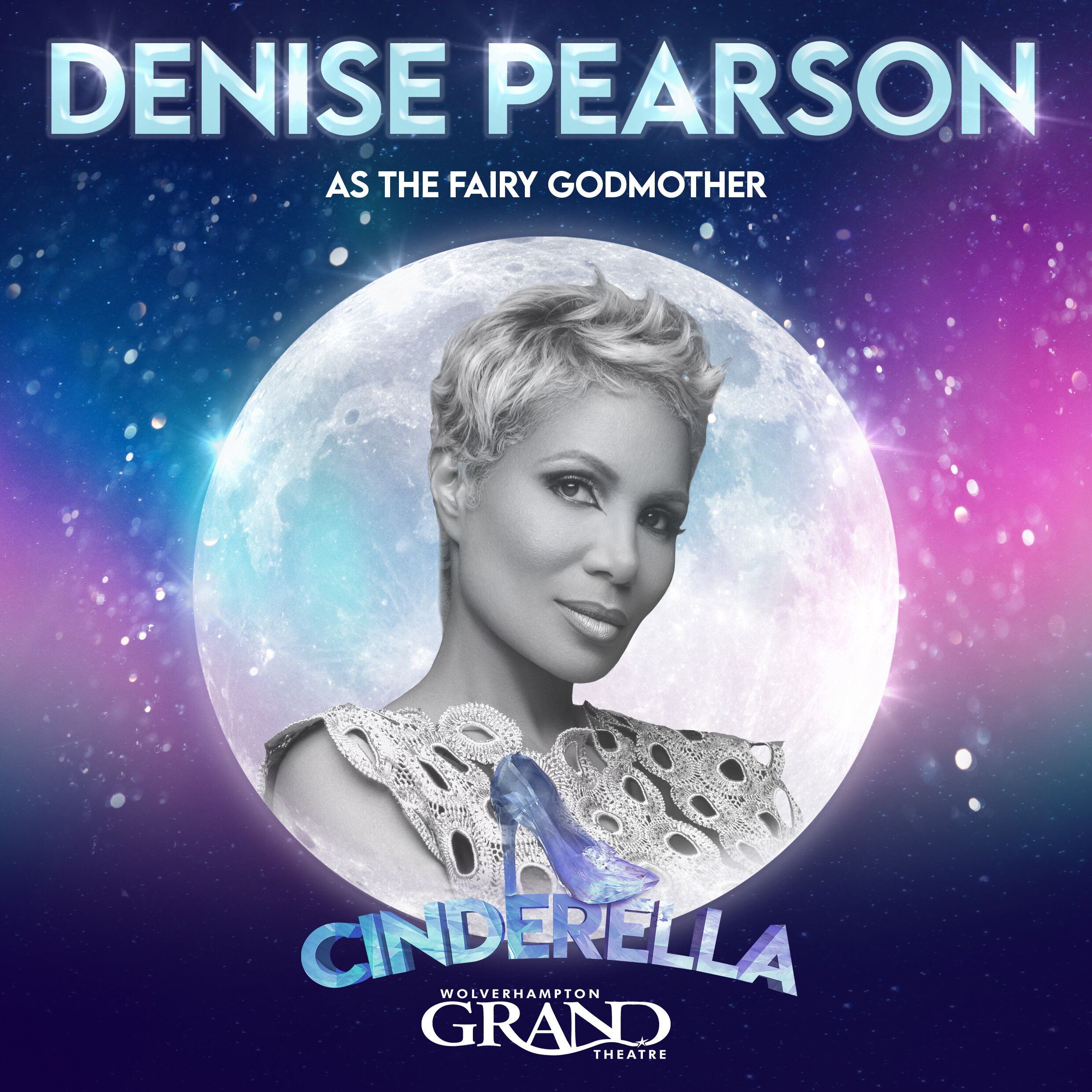
Wolverhampton Grand Theatre announced more magical casting for this year’s pantomime, CINDERELLA! Playing the title role of Cinderella is Kingswinford-born CBeebies presenter Evie Pickerill and Five Star’s lead vocalist Denise Pearson joins the cast as the Fairy Godmother.

Denise and Evie star alongside the previously announced AJ and Curtis Pritchard as Prince Charming and Dandini from Saturday 4 December 2021 – Sunday 9 January 2022.

Having grown up in Dudley, Evie has fond memories of Wolverhampton Grand. She performed at the theatre in her school days with West Bromwich Operatic Society before training professionally. On her return to the Grand and her first pantomime role, she said;  “I’m so happy to be in my hometown for Christmas! Panto is always such fun, but to be performing in front of family, friends and locals is a dream come true. I have been on the Grand stage once or twice before as a teenager, I was in awe of the theatre back then and can’t wait to feel the same butterflies again this Christmas”. 

Evie studied BTEC Performing Arts at Thomas Telford school and then moved to Liverpool at the age of 18 to study acting at Liverpool Institute of Performing Arts. During her final year at LIPA, Evie had the idea of putting on the musical Shout. The show was such a success at LIPA, that it transferred to play at that year’s Edinburgh Fringe. The show went down a storm and receiving five star reviews, it was performed again at the Fringe and in 2016 at the Royal Court in Liverpool. Since 2018, Evie has been able to carry on her love of performing, in the CBeebies House and in the CBeebies Presents productions. Evie played Princess of the Clouds in CBeebies Christmas in Storyland (2020) and Juliet in CBeebies Romeo & Juliet (2021).

Denise Pearson as Fairy Godmother.jpg

Denise Pearson is an English singer-songwriter. She was the lead vocalist with the British pop/R&B group Five Star, lovingly thought of as Britain’s Jackson 5, which comprised herself and her four siblings. The group was created and managed by their father, Buster Pearson, in 1983. Five Star had four Top 20 albums and 15 Top 40 singles in the UK, including the Top 10 hits System Addict (1986), Can't Wait Another Minute (1986), Find the Time (1986), Rain or Shine (1986), Stay Out of My Life (1987) and The Slightest Touch (1987). They won the 1987 Brit Award for Best British Group.


Denise said; “I am delighted to be joining the beautiful cast at Wolverhampton Grand Theatre for the 2021 production of Cinderella as Fairly Godmother. I am so excited to see you guys and welcoming in a sense of normality and interactive fun again. Oh yes, we shall go to the ball!”

Adrian Jackson, Chief Executive & Artistic Director of the Grand Theatre said; “I’m delighted Evie Pickerill will play the title role of Cinderella. Evie is home-grown and proudly represents the many performers who started their journey into showbusiness in local productions, right here at the Grand Theatre. She is known to millions of families on CBeebies and will be recognised by our very youngest of theatregoers – many of whom will experience the magic of theatre for the first time this Christmas. In Denise, we have a world-class vocalist and I know she will raise the roof with some great songs. Combined with AJ & Curtis Pritchard, our cast appeals to the entire family and I look forward to welcoming everyone to our very special Christmas pantomime.”

CINDERELLA will be produced by Imagine Theatre, in partnership with Wolverhampton Grand.

The headline sponsor for CINDERELLA will be Dudley Zoo & Castle.

Tickets for CINDERELLA from Saturday 4 December 2021 – Sunday 9 January 2022 are on sale now.  Tickets can be booked online at grandtheatre.co.uk.

#WolvesGrandPanto

A History of Panto

Written by Katie Shilton

Download our PDF resource copy HERE

Many people would consider pantomime to be quite a recent invention, however it has in fact evolved into the art form it is today over the course of a few hundred years. The longevity of pantomime stems from the fact that it is everchanging, and unafraid of adapting to the fashion and tastes of the times which is why the productions we see today feel relevant, fresh and modern. Here we aim to take a look at just how pantomime as we know it came into being.

Commedia dell’arte

Arlechino.jpg

When looking back into the past to find the origins of pantomime most look to the Italian commedia dell’arte which originated in the sixteenth century and was a form of outdoor theatre with performers playing stock, masked characters. These performances were full of music, dance, slapstick style comedy and acrobatics, all of which are familiar aspects of today’s pantomimes.

The actors of the commedia dell’arte were given loose scripts in which the basic scenes and plot were always the same and from this they then improvised the show. All actors had a basic repertoire of phrases, speeches, jokes, declarations of love, angry tirades and so on, dependent on the type of character that they played.  The nature of the commedia meant that only the most talented actors were capable of performing in it successfully. The basic plot of these productions generally revolved around two young couples, who were in love but who were constantly in danger of being separated by an old father or guardian type figure and his friend. These two old men were then constantly having their plans to separate the young lovers thwarted by two greedy, comical servants known as zannis.

Key Commedia Characters

There were many characters in commedia dell’arte. The zannis were probably the most important and it is from them we derive the word zany. There were first zannis and second zannis. The first zanni tended to be smarter and craftier whereas second zannis were less intelligent and far more physical and acrobatic. They were masked characters instantly recognisable to the audiences. Also masked were the old men characters of Pantaloon and Il Dottore.

Arlecchino as he was originally known in the Italian commedia but later known as Harlequin in French and English versions was one of the most famous of the zannis. He was the most acrobatic of the commedia characters, frequently doing cartwheels, flips and somersaults. He also had his own love interest in Columbina.

Pulchinella was another zanni, but he was characterised by malice and selfishness. His name derived from the fact that the character was pot-bellied and hunchbacked which gave him the shape like a young chicken, which is pollicino in Italian. Although he did not survive into panto many see him as the pre-cursor to Mr Punch from Punch and Judy.

Pierrot, another of the zanni, became popular in French commedia. In the French versions he was shy, naïve and sad and usually heartbroken by Columbine’s rejection of him in favour of Harlequin. He was identifiable by his white powdered face in this period rather than by a mask, a tradition still used my mime artists today. It was from this character that the clown developed.

Colombina, or Columbine, was the maid to the young female innamorati. Usually depicted as kind and clever (much like panto heroines of today), she was often also romantically linked with Harlequin. Unlike England during the 1500s in Italy women were allowed to perform on stage, as such the female roles in commedia were mostly played by women.

Columbina.jpg

Pantalone was a wealthy, elderly, paranoid merchant who originated in Venice and was said to be the inspiration behind Shakespeare’s Shylock in The Merchant of Venice. Along with Il Dottore they were intended to be disliked by the audience who would delight in seeing them fooled by the zannis.

The innamorati were young lovers central to the plot. These characters had no fixed names and often there were two pairs of lovers and this led to much confusion as to who was in love with who. Again perhaps Shakespeare looked to commedia dell’arte for inspiration or the plot of A Midsummer Night’s Dream.

Commedia dell’arte gradually spread throughout the continent and an Italian commedia company were part of the lavish programme of entertainment that Robert Dudley, Earl of Leicester, put on for Queen Elizabeth when she visited Kenilworth Castle in 1575. Although it was never as popular in England as on the continent some of the characters from the commedia began to find their way in to English drama on a more regular basis from the late 1600s, probably due to their expanding popularity in France. With France being so close to England it was relatively easy for some of the performers to make their way across the channel to perform in the hugely popular English summer fairs.

With the introduction of commedia characters to the fairs in England the character of Harlequin gained increasing popularity. At this point in time Harlequin did not speak, due to restrictions on the spoken word on stage in France, but engaged in lots of energetic and entertaining dancing and tumbling which delighted English audiences.

The Creation of Pantomime

The word pantomime first appeared on a poster in England in 1717, however this was not pantomime as we know it today. The word pantomime derives from the ancient Greek where a pantomimus, the ‘imitator of all’ was a dancer who played multiple roles within the same production, expressing himself only through movement to the music and telling classic tales from mythology or the ancient writers. I think we would all agree that this bears very little relation to the productions we are all familiar with now, so how did the word pantomime come to be used for a totally different type of production?

When John Weaver produced the above mentioned  ‘pantomime’ in 1717 entitled The Love of Mars and Venus, an ‘Entertainment of Dancing’ it was purely a dance show as described above. However, when a month later he produced a show called The Shipwreck; or Perseus and Andromeda which was billed as ‘A New Dramatic Entertainment of Dancing in Grotesque Characters’ he introduced the commedia characters of Harlequin and Columbine. The general public were confused by the inclusion of these characters in a classical tale and as he had previously used the word pantomime for the first production somehow this word stuck in the mind of the perplexed public and henceforward came to mean any sort of entertainment that involved these type of characters.

Although Weaver is the first to have included the Harlequin character in a production of the classical tales, it was the legendary actor-manager John Rich that really exploited this to its full potential and was instrumental in the development of pantomime.

Rich produced what is considered to be the first real pantomime in 1721 entitled The Magician; or Harlequin a Director. The character of Harlequin was transformed into a mischievous, funny magician as well remaining the love interest of Columbine. Adding the ability to do magic to the character of Harlequin gave Rich the chance to showcase his flair for spectacular. We may think of special effects being a fairly new addition to theatrical productions but in fact the early pantomimes were packed full of spectacle and were a key ingredient in their success. Under Rich sights such as working windmills and fire breathing dragons were very common. In fact so reliant were the early pantomimes on these elements that Tom Dibdin wrote “if the machinery does not work the pantomime must fail!”

These early pantomimes would probably not be recognisable to the audiences of today and were not intended to be watched by children. Originally the productions had serious and comic parts interwoven and very little linking the sections.

Following the death of Rich the form of the pantomime began to change. Although they still contained serious and comic sections these became separated into two distinct parts with the serious part being performed first and the comic part, the harlequinade, after and were linked by the fact the principal characters of the serious part were at the end transformed into the characters that would appear in the second part with a spectacular transformation scene, and this pattern endured for the next century.

It is interesting to note that the word slapstick derives from a prop from the character of Harlequin in the harlequinades. The magical Harlequin carried a sword or a bat which also acted as a magical wand and this had on it a hinged flap which made a slapping noise when he hit something or someone to give a theatrical sound in a similar way in which today we use a sound effect for falls, trips etc. It could also be used to instruct the backstage crew about scene changes.

Also in Harlequin the Sorcerer; with the loves of Pluto and Prosperine we have the first recorded ‘slosh scene’, a familiar sight in many theatre each Christmas these days which was also hugely popular with the audiences of the time.

The Rise of the Clown

Unfortunately for poor Harlequin, the late 1700s gave rise to the popularity of the clown, the most famous of these being the legendary Joseph Grimaldi who made his stage debut aged just two years and four months at Sadler’s Wells Theatre on Easter Monday 1781. His first appearance as clown however was not until 1800.

Joseph-Grimaldi - NPG.jpg

The 1806 production of Harlequin and Mother Goose; or, the Golden Egg, was the production in which the clown finally trumped Harlequin and became the central and more comic figure in the harlequinade, rather than Harlequin himself. Under Grimaldi, the clown became a mischievous, anarchic character who played tricks on people and caused general chaos upon the stage, had great acrobatic ability and was also a master of satire and comic mockery which was loved by the audiences. Harlequin was relegated once more to simply being the love interest of Columbine.

Although the clown spoke very little he performed a number of songs that were hugely popular with audiences such as ‘Hot Codlins’.

Joseph Grimaldi was so popular as a clown that another name for a clown is a ‘joey’ in his honour.

Old Stories For New

A key date in the history of pantomime is 1843 as this saw the lifting of the Theatres Act which had previously prevented any theatre without a Royal patent from producing a show with purely spoken dialogue amongst other tightly controlled restrictions. Pantomime was now free to do exactly as it pleased and it began to incorporate the witty word play, double entendre and audience participation that are so familiar to us today.   

As pantomime developed through the 1800s it took much inspiration from the extravaganzas that were popular at the time, in particular those of James Robinson Planche. An extravaganza was a comic drama, full of satire and music and stunning special effects. Although this may sound similar to pantomime as it is today, at the time they were considered quite different with pantomime being considered a much coarser, lower form of entertainment.  The Athenaeum in 1849 said of an extravaganza in comparison to a pantomime; “This pleasant sort of entertainment which sends light laughter round the theatre and keeps up a continual smile on the countenances of the audience, compared with the coarse exaggeration and vulgar buffoonery of pantomime, is what the raillery of polished wit in a drawing-room is to the rude horse play and ungainly gambols of rustic merry making”.

The 1700s saw a rise in the popularity of folk tales and fairy tales following the publication of Madame d’Aulony’s collection of fairy tales (a term which she originated) Les Contes des Fees in 1697, around the same time that Charles Perrault also published his collection of fairy tales, Histoires ou contes du temps Passe. The early 1800s also saw the first English translation of The Arabian Nights which contained the stories of Aladdin, Ali Baba and Sinbad. Consequently these stories began to replace the classical tales and mythology in both the extravaganzas of Planche and in pantomime.

One of the earliest recognisable titles is Mother Goose in which Joseph Grimaldi appeared in 1806, however this was a very different character and story from which we know today. Mother Goose as we know it did not truly come into being until the legendary panto dame Dan Leno played the role in a version by J. Hickory Wood and Drury Lane manager Arthur Collins in 1902.

One of our most popular pantomimes is Cinderella. Although various versions of the story had existed for a long time it became more popular when it appeared in Charles Perrault’s collection of fairy tales in in 1697. This version which introduced things such as the Fairy Godmother, the pumpkin and the glass slipper was the basis for the 1820 comic opera by Rossini, La Cenerentola, which introduced key characters to the story who appear in panto today such as the Baron and Dandini. Shortly after the opera, the tale was performed at Covent Garden at Easter for the first time as a pantomime. It was not until 1860 that the sisters of the story became ‘ugly’ and Buttons made his first appearance. Much like today the names of the Ugly Sisters were always changeable and altered to refer to topics or people that were popular at the time and the name of the Prince as Prince Charming did not become fixed until after World War One. There is also a suggestion that iconic glass slipper in Perrault’s version came about due to a mistranslation of the French word vair meaning fur for the word verre meaning glass, as in Madame d’Aulnoy’s version Cinderella’s shoes were ‘red velvet braided with pearls’. Whether it was a mistake or a deliberate change by Perrault the fact remains that today the glass slipper is one of the most iconic images in fairy tales and pantomime in the world.

Aladdin’s first appearance as a pantomime was on Boxing Day 1788 at Covent Garden and is taken from The Arabian Nights. The character of the wicked magician did not have his name fixed as Abanazar until a non-panto version in 1813, and Widow Twankey received her name in 1861 and is named after a type of Chinese green tea due the British public’s fascination with the East at this time.

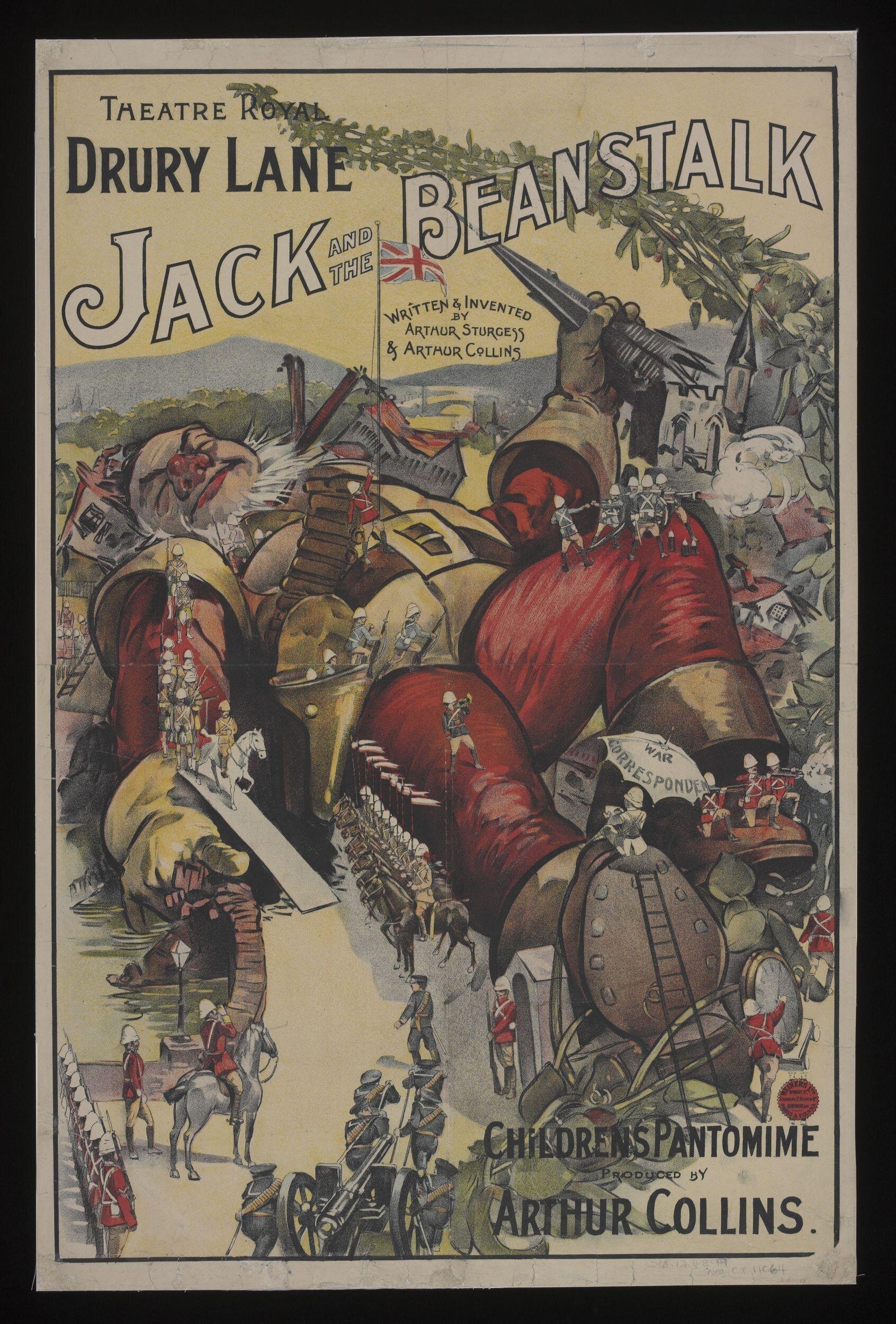
The pantomime version of Jack and the Beanstalk was first performed in 1819. The story evolved from a combination of different folk tales going backs hundreds of years. A reference to the popular Cornish folk tale of Jack the Giant Killer appears in Shakespeare’s King Lear but one of the first written versions comes from a 1734 story The Story of Jack Spriggins and the Enchanted Bean.

The story of Dick Whittington is unusual in that it is the only one apart from the rarely performed Babes in the Wood, that is said to have its basis in fact. Indeed Richard Whittington was without doubt a real person who really did marry an Alice Fitzwarren and was mayor of London four times from 1397. Where the cat came from however is less certain but appeared in stories about Richard Whittington from 1605 onwards. As a pantomime it was first performed in 1814 as Harlequin Whittington or The Lord Mayor of London with Grimaldi as its star. It was in a 1908 production that music hall comedian Wilkie Bard introduced the song ‘She Sells Sea-Shells’, and this established the pantomime fashion of tongue twisting lyrics which is still a feature of many shows today.

From the 1860s onwards the titles of the pantomimes were pretty much fixed and the basic form has changed little since the start of the nineteenth century, however that does not mean that that the genre has not still been changing and evolving.

The Influence of the Music Hall

From the mid-1860s the stars of the music hall began to infiltrate the world of pantomime being popularised by Augustus Harris, the new manager of Drury Lane in 1880 and this influx of well-known music hall performers changed the shape of pantomime forever. Their introduction reduced the plot in favour of popular musical numbers and routines and the harlequinade became shorter and shorter until it has disappeared completely by the 1930s. Music hall stars were the celebrities of their day, much like television actors are now and so the practice of top billed celebrities appearing in panto was born.  The audiences wanted to see their favourite stars performing the songs and routines that they were well known for and so scripts had to be adapted to accommodate this.

There’s Nothing Like a Dame

Dan-Leno NPG.jpg

It was under the influence of the music hall stars that the pantomime dame began to be the star of the show. Cross dressing has been part of theatrical performances for centuries and the earliest ancestor of the pantomime dame can be traced back to the commedia and to the miracle plays of the middle ages and in Restoration comedy it was common to see men dressed as comical old women. Although Joseph Grimaldi often performed as a comical female character in his pantomimes until the turn of the century the dame role in many other productions was often small and the character not particularly interesting. One of the key figures in creating the popular character of the dame as we know it today was Dan Leno.

George Wild Galvin, better known as Dan Leno, was one of the biggest music halls stars of the 1880s. He was known for his monologues and comic songs and his characters were created from his observations on working class people in London, the most famous being his character Mrs Kelly. He played the dame at Drury Lane for sixteen year and his performance as Mother Goose strongly influenced the role of dame from then on.

There really is nothing like a dame. As characters in the commedia wore masks that were instantly recognisable to audiences who were familiar with that character, the elaborately painted face of a pantomime dame acts almost as a mask in the same way – we see a picture of a pantomime dame and even without being told we immediately know what character we are looking at.

Originally the pantomime dame could be played by either a man or a woman and the tradition of the pantomime dame being played by man was not cemented until the end of the 1800s when performers such as Dan Leno elevated the role. Interestingly today we are seeing the re-emergence of the female dame, in particular there is a small but growing trend for the Ugly Sisters to be played by females rather than males.

Principal Boys

Although women had played breeches parts for around two hundred years, this was not a device commonly employed in pantomime until the mid-1800s and this was because until the decline of the harlequinade there were no suitable roles available. However as the ‘openings’ became longer and the harlequinade shorter and roles for the popular female music hall performers needed to be found, women leapt at the chance to take on the role of the fairy-tale hero. In Victorian era England standards of propriety were so high that even the legs of a piano had to be covered. Whereas women in general were forced to wear large uncomfortable floor length dresses a woman on the stage was allowed to show her legs on the proviso she was playing a male role. This gave panto an additional appeal to anyone keen for a rare sighting of female legs!

There is much debate as to who can be classed as the first female principal boy in panto. Many would argue it was Eliza Povey in 1819 playing Jack in the first ever pantomime version of Jack and the Beanstalk who should be awarded this moniker, however she did not also play Harlequin nor would she climb the beanstalk which reached from the stage floor up to the roof. Instead a lad whose job it was to fetch water for horses at the coach station was deemed a suitable double to climb the beanstalk each night and apparently this doubling was never once spotted by the public!  Because of this Madame Celeste is sometimes put forward as being the first true pantomime principal boy for her appearance as both Jack and Harlequin in Jack and the Beanstalk in 1855. However, it was really the music hall stars such as Vesta Tilley and Marie Lloyd in the 1880s that cemented the popularity of a female principal boy.

Vesta Tilley.jpg

The female principal boy faced a decline in the 1950s and 60s as male stars from the music and television world started to take over the role, beginning with Norman Wisdom playing Aladdin at the London Palladium and he was followed by others such as Cliff Richard, Frankie Vaughan, Engelbert Humperdinck and Jimmy Tarbuck. This trend was reversed in the 70s when Cilla Black took to the Palladium stage as Aladdin in 1970. However, over the last two decades we have once more witnessed the decline of the female principal boy.

Skin Characters

Something once integral to a good pantomime were the skin characters. Roles such as the Goose in Mother Goose or Dick Whittington’s cat which see an actor play an animal is known as a ‘skin’ role and animal roles have been part of pantomime since the beginning. Originally any actor could be called upon to play a skin character, even Henry Irving played a wolf early in his career in Little Bo-Peep. These skin performers were once so popular it became a speciality which reached its pinnacle in the mid nineteenth century and one of the most famous skin actors was George Conquest who went far beyond the regular cow, cat and goose we think of today, once performing as an octopus in a suit that measured twenty-eight feet across. Although animals still appear in pantomime today the true specialists have almost died away as there is no longer a call for them for the rest of the year and the roles have reverted back to regular actors and members of the ensemble.

The Modern Era

Following on from empresarios such as John Rich and David Garrick, the first half of the 1900s saw Francis Laidler take on the mantle as the ‘king of pantomime’. A former clerk in the wool-trade industry Francis built the Alhambra in Bradford at the height of the popularity of the variety show which was the successor to the music hall and produced pantomime for half a century throughout the UK. His 1958/59 production of Jack and the Beanstalk with Ken Dodd was so popular it began with them celebrating Christmas and finished with them throwing out Easter eggs as it ran until March.

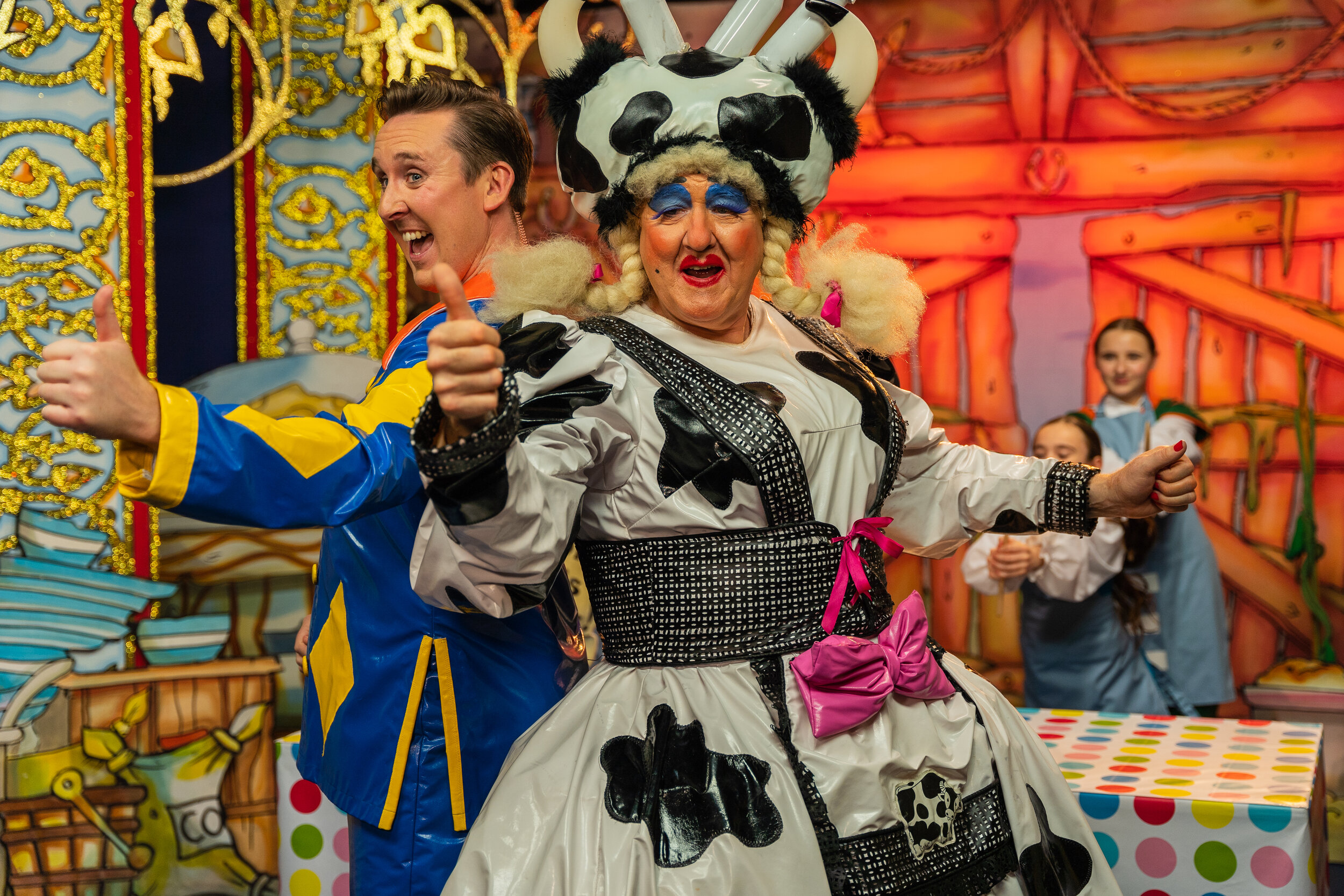
074_DMH Jack and the Beanstalk_Pamela Raith Photography.jpg

In the 1950s and 1960s one of the biggest names in pantomime production was Derek Salberg who oversaw numerous successful productions from the Alexandra Theatre in Birmingham. Although he employed well known people and speciality acts his pantomimes allowed the inclusion, not intrusion, of these performers, with the emphasis of the production being on its strong storyline.

The pantomimes we see today contain characters, plot devises and routines developed over a few hundred years. Some follow the model of Derek Salberg’s strong story-based pantomimes and are designed to delight and entertain all of the family, whereas others are perhaps influenced more by the music hall and variety era days in which the plot is secondary to the star turns and speciality acts and with more adult humour.

Although panto has changed considerably over the last few hundred years one thing that has not changed is its financial importance to the theatre industry and its popularity amongst the general public. Although not a fan of pantomime David Garrick came to realise as far back as 1750 just how crucial they were to the survival of the theatre industry when having resisted for as long as he could Boxing Day of that year saw him accept that he needed to give the public what they wanted and he produced his first pantomime. From this point on Drury Lane was home to one of the most spectacular pantomimes in the country with a small fortune being spent to ensure it was the best show in town each Christmas. It also helped cement the tradition of pantomimes being performed at Christmas as Garrick held the view that if he really had to do them he would associate them with the frivolity of the Christmas season, rather than with the theatre itself.

Pantomime spread outwards from London to theatres all over the United Kingdom and now almost all regional theatres have a pantomime or some sort of Christmas show playing during December. During 1900s panto gradually faded from being an offering of the major West End playhouses who instead started to house long running block-buster musicals. However, recent years have seen panto return to the West End with the annual panto at the Palladium.

Critics have been proclaiming the decline of pantomime almost since its beginning but after around 300 years it is still a major part of Christmas tradition for millions of families and brings in revenue that helps support theatres throughout the rest of the year and so to those who question whether it is dying out the answer is simple – “oh no it isn’t!” With its focus on family entertainment and ability to evolve pantomime is destined to bring magic to families throughout the United Kingdom for years to come.

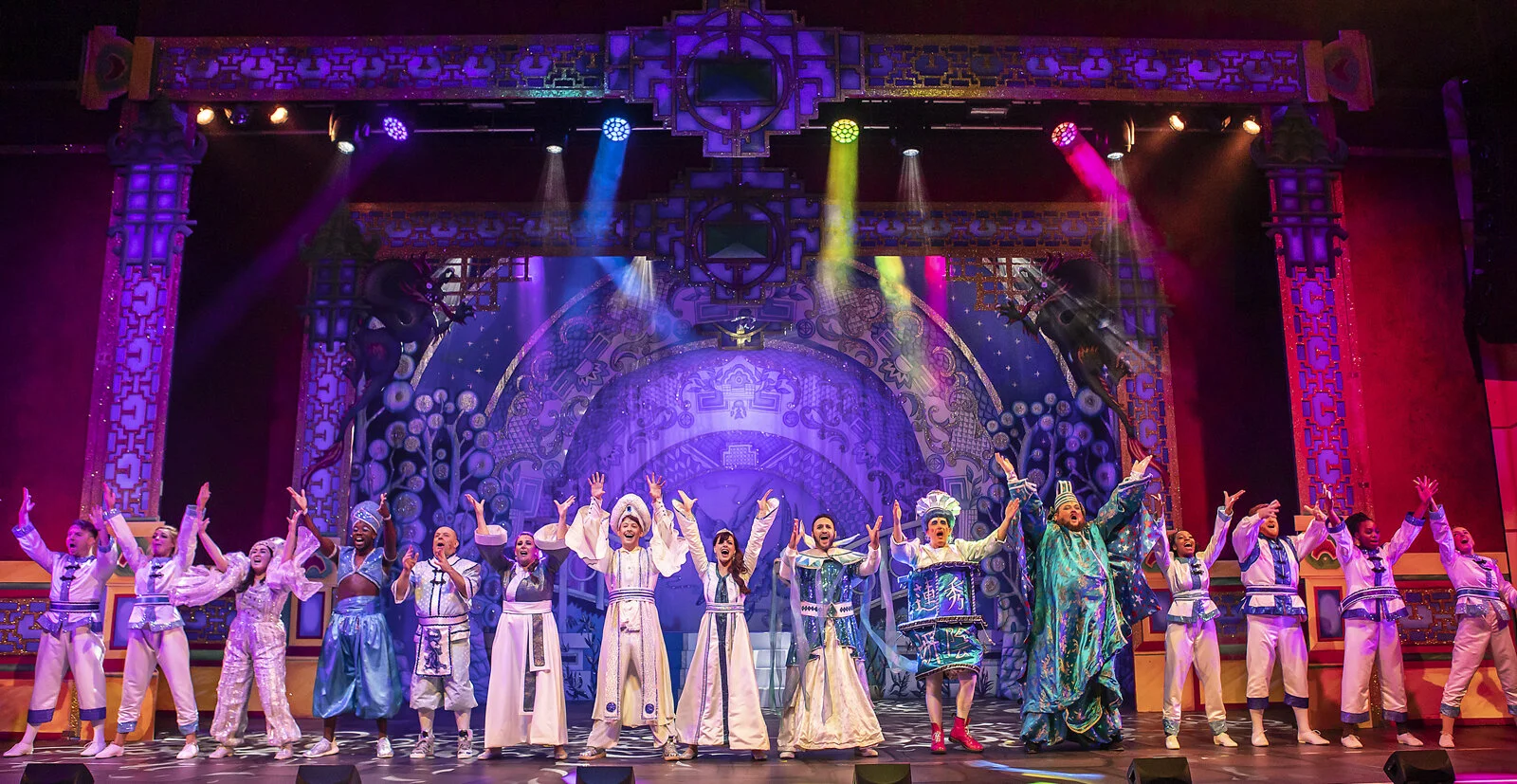
155_DMH Aladdin 2019_Pamela Raith Photography.jpg

Sources:

  • Oh Yes It Is!: A History of Pantomime by Gerald Frow

  • www.vam.ac.uk

  • www.bradfordtheatres.co.uk

  • www.its-behindyou.com

 Photos:

  • Arlechino (later Harlequin) and Columbina. Masques et bouffons; comedie italienne by Maurice Sand 1862

  • Joseph Grimaldi. Published by Samuel De Wilde, 1807 © National Portrait Gallery, London

  • Dan Leno by William Davey, published by J. Beagles & Co. © National Portrait Gallery, London

  • John Rich as Harlequin. © Victoria and Albert Museum

  • Poster – Jack and the Beanstalk at Theatre Royal, Drury Lane, 1899 © Victoria and Albert Museum

  • Marie Lloyd. Photographic copy of original 19th century photograph. © Victoria and Albert Museum

  • Vesta Tilley – Photographic copy of original 19th century photograph. © Victoria and Albert Museum

  • All other images copyright Imagine Theatre Ltd

What Theatre Producers do when they can’t do Theatre…

On 12th October 2020, at the end of a very long 7 months post theatres closing, Imagine Theatre were fortunate to hear that we had been awarded a lifeline grant from the Culture Recovery Fund. This supported us from 1st November 2020 to 31st March 2021.

 We were then fortunate to be awarded a second lifeline grant which supported us from 1st April to 30th June 2021.

 These two grants have been an absolute lifeline for us. To put it into perspective, our turnover plummeted overnight, dropping over 95%, with our staff (except Steve, Sarah and Laura) spending almost 8 months on furlough. The grant meant that, although we did have to sadly lose some staff, our core team could return back to work on 2nd November and we were able to undertake lots of ‘behind the scenes’ organising and sorting, ready for restarting.

 The funding provided by those two lifeline grants comes to an end today and so we wanted to look back at what we’ve done during COVID, with grateful thanks to DCMS, the Arts Council and Warwick District Council.

 Although one of our main focuses has been on scenario planning the roll out of our 2021 Christmas season, there’s so much more that we managed to fit in. So, here is our A-Z of what we did when our theatres were closed…

 Artwork – with head space and time to think, we redesigned all our marketing assets (including design and a new website). And we love them. Thanks to Harry Neal Creative and Char.

New 2021 Designs.jpg

Barcoding – a project we’ve wanted to do for a long time is to photograph and catalogue absolutely everything in our warehouse (approx. 40,000 items!) and upload it all onto our data management software, “Current” and we’ve almost done it – literally the last few wardrobe items are being finished off as you read this! It’s been utterly epic and a massive team effort from the Ops team of Dave, Cal, Dawn and Roz with support from Karen, Esther, Aaron and Arran.

Christmas off – it was our first one in years and years (more than 30 years for Steve, 20+ years for Sarah and Laura and 15+ years for Louise and Dave), and we don’t want another one…

Data management – setting up new software systems to support our hires business (see Barcoding!)

EDI project – We’ve had time to really hone down on our Equity, Diversity and Inclusion project. More information about what we’ve done, and “Imagine Cares” will be out soon.

Furlough – many of the team got to enjoy the wonderful 2020 sunshine with an unplanned summer off. Let’s hope we get more of the same in 2021. (More sunshine not furlough!!!)

Grants – Thank you to the Arts Council, DCMS, CRF and Warwick District Council. You’ve kept us going when we weren’t able to earn any money, when the theatres were all dark.

Hiring – Who would have thought we’d have had an entire year with no scenic and costume hires…. Well, apart from the phone call asking us for almost 400 costumes. When do you need them? In 7 days, you say? No problem…… cue the entire team moving into the wardrobe department.

Insurance – or lack of! One of the biggest challenges to reopening will be the need for some form of government backed cancellation insurance. Fingers crossed!

Justin Live – our Autumn 2020 / Spring 2021 tour starring CBeebies superstar Justin Fletcher was postponed. We’re optimistic for a smooth roll out now in Autumn 2021/ Spring 2022.

Knowledge – We’d always wanted time to write an in-depth history of panto article, to provide a detailed resource of where people could learn more about where panto came from. Katie has duly obliged with something quite fabulous which we release next week.

Lighting the building in red – Lighting theatres in red became a symbol of the crisis that our industry has faced. So, solidarity with the rest of the industry, we lit our building in red from 2nd November 2020 to 9th January 2021, marking the period of what would have been our 2020 pantomime season.

 Marketing Network – we have formed a network of the marketing departments of the venues we produce panto in. It’s a chance to share knowledge and to support each other. We cannot wait for the next meeting.

New Offices - OK, well not really ‘new’, more redecorated (but we’d already got something for R!!)

Online Pantomime – 2020 was the year panto moved online, and we worked alongside the Belgrade Theatre, Coventry on their online production of Jack and the Beanstalk.

Chloe-Ely-Photography-Jack-183.JPG

Podcast – we launched our podcast “Just Imagine”. Thanks to the amazing Martin Ballard, and all our guests so far… and there is more to follow.

QR codes – This has definitely been the revival of the QR code, with sooooo many check ins on the NHS app! (This could also be “Quite a few viewings of children and pets on video calls”!)

Remote working – and the fun of setting up everyone working from home.

Santa streaming – Santa moved ‘online’ too, and our production of Santa’s Christmas Rescue which should have toured across the UK was beamed around the world into people’s homes instead.

Chloe-Ely-Photography-Santa-Show-2020-79.jpg

TV interviews – many different channels and programmes came in to visit during 2020, especially after our blog detailing why we were having to postpone our 2020 pantomime season.

Undoing our 2020 plans – the unthinkable became reality when we had to postpone the entire of our 2020 pantomime and Christmas season.

Virtual learning – With a little more time on our hands, we have been able to attend a number of webinars to build and support our learning.

Workshop – One of our goals came true when we launched Mi Workshops along with Matthew Jacques. We can’t wait to see what we get to build next. There’s some really exciting projects in the pipeline.

Xmas tree replaced – The last one had been with us for quite a while! It was like saying goodbye to an old friend.

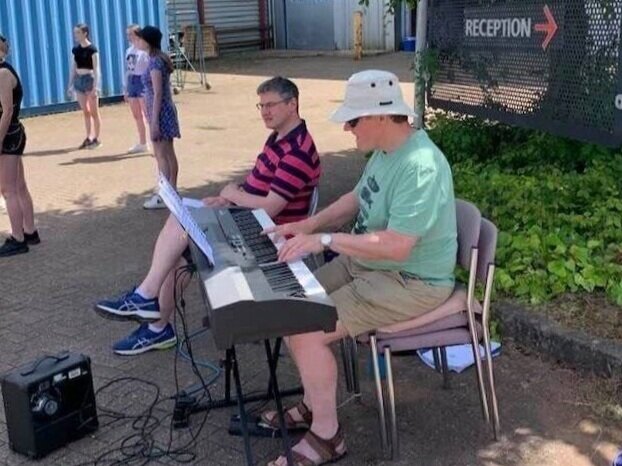
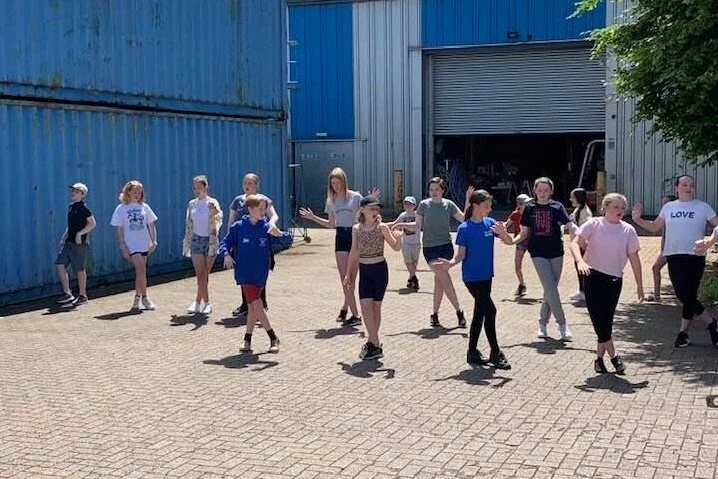
Youth group rehearsed in our car park - Coventry’s own Youth Operetta Group, YOG, rehearsed their showcase on our carpark – socially distanced following all the rules and regulations of course

yog kids.jpg
yog2.jpg

Zoom meetings – Who’d heard of zoom before Corona hit? Now it’s one of life’s essentials! There’s been copious amounts of saying ‘you’re on mute’ – that along with ‘Sorry if you can hear my washing machine’ ‘excuse the cat on my desk’ and ‘bear with me, that’s my front door with a delivery.’

It’s been quite a different 16 months, full of highs and lows. We still can’t believe we lost the entire of our 2020 Christmas and pantomime season, But the shows WILL go on again, and we will be back in theatres really soon. Oh yes we will!

And thank you again to Arts Council England, DCMS and Warwick District Council. You literally have been life (or company) savers.

Best wishes

Sarah and Steve

FROM ONE BALLROOM TO ANOTHER: AJ AND CURTIS PRITCHARD TO LEAD WOLVERHAMPTON GRAND THEATRE PANTO - CINDERELLA!

Wolverhampton Grand Theatre have announced today that brothers AJ and Curtis Pritchard will star in the spectacular family pantomime CINDERELLA from Saturday 4 December 2021 – Sunday 9 January 2022.

This huge casting news is a real treat for audiences who are desperate for pantomime to return to the city and ensures that the Wolverhampton pantomime is the one to see this year. The duo have recently joined the cast of Hollyoaks and are highly regarded for their professional dancer positions on Strictly Come Dancing and Ireland’s Dancing With The Stars. AJ and Curtis will bring with them a wealth of dancing styles to sweep Cinderella off her feet in what promises to be a most exciting re-opening pantomime for the Grand Theatre.

Fresh from the I’m A Celebrity Get Me Out Of Here! castle, AJ is now the prince of a much more glamourous one, taking on the role of Prince Charming. The Strictly Come Dancing professional joined the hit BBC show in 2016 and was a firm favourite for the four seasons he appeared. Since then, AJ has made numerous TV and theatre appearances, often alongside his brother who will be right alongside him this Christmas as the Prince’s right-hand man.

Curtis will play Dandini, allowing plenty of opportunity for mischief and identity-swapping as he helps the Prince and Cinderella to find love… something that Curtis knows all too well having won the hearts of the nation in the 2019 series of Love Island. Curtis appeared as a professional dancer on Ireland’s version of Strictly, Dancing With The Stars. His other TV appearances include The Greatest Dancer, Celebs Go Dating: The Mansion and together with AJ appeared as guest choreographers for the season one finale of RuPaul’s Drag Race UK.

On joining the Wolverhampton Grand Theatre pantomime, AJ said; “I am so excited to be appearing in Cinderella at the Wolverhampton Grand Theatre this Christmas. For performers everywhere, it has been devastating that theatres have been closed for so long and with such a limited amount of live performance opportunities. So what better way to celebrate entertainment being back than a trip to the panto where the whole family can get together again? There is such a good feeling to this show and it’s going to be bigger and better than ever before. We’re back doing what we love the most and so excited for friends, family and theatre-goers to experience the magic of panto again."

Curtis said;  “I’m delighted to be playing Dandini in Cinderella. I have appeared in pantomime before but this is the first time AJ and I have appeared together so it’s really exciting. The past year has been extremely unusual and therefore it’s great to have something to look forward to and know that the year is going to end on a high. AJ and I have been dusting off our dancing shoes so expect some big dance numbers in the show! We can’t wait to get started.”

Adrian Jackson, Chief Executive & Artistic Director of the Grand Theatre said “we are thrilled to welcome AJ and Curtis to Wolverhampton for our pantomime. Between them, they will bring so much to the show with their infectious personalities and incredible dancing talent. They are such naturals on stage with undeniable showmanship, making them favourites with the whole family. This show will have something for everyone – think of a West End musical, that is the scale! The plans are dazzling and I’m very excited to share with you our new Wolverhampton panto!” 

The pantomime, which was previously planned for 2020, had to be postponed until this year due to the national closure of all theatres. CINDERELLA will be produced by Imagine Theatre, in partnership with Wolverhampton Grand.

Both Imagine Theatre and Wolverhampton Grand have a rich history of producing top-quality entertainment and together will form a perfect partnership. The casting of AJ and Curtis launches an exciting run up to the pantomime season, with many more announcements and further casting to follow very soon.

Imagine Theatre’s Managing Director Steve Boden said; “We are thrilled to have been invited by Adrian Jackson to work alongside him and the fantastic team at the Grand Theatre to create this year’s spectacular family pantomime. As a West-Midlander myself and having trained in the city, I love the warmth and community spirit that audiences bring to the Grand Theatre pantomimes. Along with AJ and Curtis and some of the most sophisticated production elements ever seen in pantomime, we will spectacularly launch the next generation of Grand Theatre pantomimes”.

The headline sponsor for CINDERELLA will be Dudley Zoo & Castle.

Tickets for CINDERELLA from Saturday 4 December 2021 – Sunday 9 January 2022 are on sale now.  Tickets can be booked online at grandtheatre.co.uk.

365 Days On

Looking Back

We at Imagine, like so many others, will always remember 16th March 2020. It took just 10 words.

 “public venues such as theatres should no longer be visited”

 That was it. Our industry closed, and we were in limbo.

 Steve and I had been to the theatre just 2 days before, enjoying a performance of ‘Once’ at the Belgrade Theatre, Coventry. That, and so many other tours and West End productions ground to an immediate halt. The instruction to close, whilst not a surprise, came quicker than expected. Sets were left on empty stages, unplayed music sat on music stands in empty pits, unworn costumes lay abandoned in dressing rooms, and front of house merchandise points remained fully stocked still waiting for their customers.

 The brilliant Nina Dunn, who just 3 months before had been creating the graphics for our magical digital production of Cinderella at Fairfield Halls, took a series of poignant photos of abandoned theatres to ensure that this pause in the theatre world was forever captured. 

At Imagine, our own 2020 pantomime season, which was full steam ahead in its planning was thrown up in the air. We heard lots of statements along the lines of

“we’ll be back open soon”

“It’ll be a couple of months hiatus”

“This can’t go on for long, can it?”

 We wrote a series of blogs last year about how it felt to be a pantomime producer in a pandemic, why we were on the verge of having to cancel our 2020 pantomime season, and finally what it felt like to make the final call and postpone our entire portfolio of shows by 12 months, all of which are on our website. The unthinkable had become reality.


365 days on

Here we are, almost a full year on, and apart from a few productions which managed to get up on their feet before having to close again, there has been very limited amounts of theatre in the UK for 12 months. What was once a completely unimaginable situation is about to reach its first anniversary since closure. It has been a tough year full of frustration, financial hardship and worry for so many.

 It’s one year for theatres themselves, but also one year for those individuals and businesses who work in and are the backbone of the theatre industry. Theatres are not just a place of entertainment. They are a part of the local community, a place to belong and escape, and for countless thousands, a place of work.

 The majority of those who work in theatre are freelancers, and they make up a very significant number of the “Forgotten 3 million’ who have not been able to claim furlough and have had no or limited help from the Self-Employed Income Support Scheme. The March 2021 budget has hopefully enabled an increase in the number able to access the SEISS but there are will still many who are excluded.

 The hardest thing throughout this whole pandemic has been our inability to create jobs for those who would normally work on our shows, in addition to not being able to entertain hundreds of thousands of people.


Light at the end of the tunnel – a roadmap for England

What is positive, is there is light at the end of the tunnel after a very long 12 months. We now have a roadmap for reopening which is a huge step forward in the right direction. In England, it is Step 3 (no sooner than 17th May) for reopening with social distancing, and Step 4 (no sooner than 21st June) without social distancing. (At the time of writing, rules are yet to be issued for Scotland, Wales and Northern Ireland.) These are such promising headlines, but as always, the devil is in the detail of the actual roadmap. It’s never as straightforward as the headlines would have you believe!

 The roadmap for England is a fabulous set of guidelines driving us towards our end goal – but that’s what it is, it’s guidelines as to how we MIGHT get our industry fully reopened by 21st June. The language for Step 4 and the reopening of live events without social distancing is hopeful rather than guaranteed. The roadmap is scattered with language such as “we aim to”, “we hope to” and steps as to how things “might” happen. Indeed Step 4 is caveated with ‘this is all subject to change’.

 We know the success of the vaccination rollout is surpassing everyone’s expectations, but while being optimistic we are also realistic to the mountain we must climb to firstly get theatres reopened, and then to remove social distancing. We know that all mountains are climbable; the question is how quickly and how safely?

 The roadmap for England states there are 4 tests we must undertake to move to step 4. These are (source England’s COVID roadmap published 22nd February 2020 pages 40 - 43)

  • COVID status certification - This involves using testing and vaccination data.

  • Large Events – Which states the DCMS “have been working with representatives from industry and civil society to explore when and how events with larger crowd sizes, less social distancing or in settings where transmission is more likely (i.e. indoors), will be able to return safely.“ There will be pilots starting in April 2021

  • International Travel – There is much detail around testing and vaccinations in this section to reopen travel.

  • Social Distancing - Review as to when it might be removed along with other mitigations such as mask wearing


Producers and Venues – a finely honed eco-system

There is no doubt that there is massive ambition within both the venue and producing communities to get venues open and productions back up and running. But there are also things that we must consider when making decisions about when the right time is to get things moving. Venues and producers are like a finely honed ecosystem. Venues need product to put on their stage; producers need venues to put on their productions. We can’t have one without the other.

 For venues, sadly many have had no option but to undertake a programme of redundancies over the past year. Many find themselves with less than half the number of staff they need to function, meaning that they will need to undertake a big recruitment drive to reopen. Recruitment on that scale doesn’t happen overnight. It requires considerable investment BEFORE a venue is ready to reopen and take its first show back in, but many are not currently in a strong enough financial position to be able to re-recruit. The catch-22 is that they need shows to come through the doors, bringing income back into buildings to be able to afford to do it.

 Producers like us need lead time to our shows. A pantomime season takes 16 months of upfront work to prepare for opening. UK wide tours of large musicals and plays can take even longer from first planning through to opening night. So, time is already ticking but we still don’t quite have the full clarity that we need, even with a roadmap. Things like

  • Can we move a show from venue to venue with only 1 days gap, or do we need to wait 3 days following COVID safety guidelines?

  • How often does testing need to happen within companies, and who is paying for it?

  • What happens if a cast member is unwell so goes home and then subsequently tests positive? Does the whole show have to close or just that one person stay off sick in isolation?

There are so many unanswered questions that need to be understood before a commitment to produce a show can be undertaken.

 Venues need a minimum volume of shows going through their building to be able to reopen. Producers need the confidence buildings are going to reopen to risk their investments on shows. If there isn’t enough product on the touring circuit, it’s not financially viable for venues to reopen, and the producers have nowhere to stage their shows.

 So, the big question for producers and venues alike is ‘how confident are we that 17th May and 21st June are achievable and realistic?’. As we said, there is a huge amount of positivity and optimism around reopening, but also reality and caution around the risks involved from all sides.

 It’s actually easier to get a ‘resident’ show up and running right now than a touring show. By ‘resident’ we mean a show that lives in a single venue such as West End productions or a pantomime. They are created for one theatre, and once open they stay where they are. Nothing is moved from that location and there is no risk of cross contamination from touring. They rely on just one venue to be open rather than a series of them.

 For regional theatre which tours around the UK, such as the big musical tours, there are many more logistics to be considered. Each show tends to move each week, meaning that there is a potential contamination issue. Also, they will be booked into many venues over a period of time rather than just one, and there is no guarantee that all of those venues will be reopened at the same time. Indeed, most tours travel the 4 countries of the United Kingdom and at the time of writing, we don’t have clarity as to what the rules of each individual country are. This may leave gaps in the schedule. Gaps may mean that a production is no longer financially viable. If a venue starts to lose productions, it may no longer be viable to keep the venue open.

 As we said, a very finely tuned eco system with all parties reliant on each other to stay open and viable. It’s almost the perfect storm!


Considerations

Throughout all of this, we have not considered what the medical and scientific data is saying about the virus. We know that, thanks to the vaccination programme, we are expecting to see COVID move from pandemic to endemic – something we will learn to manage to live with rather than the global crisis we face currently, but at what speed and with what long term measures?

 There is still little clarity regarding testing and “COVID status certification” and what that means for theatre audiences. Do we have to test everyone before they can come into the auditorium? Will the Government introduce vaccine passports? Will theatres be able to remove all mitigations such as mask wearing? Lots of questions to be answered, and the planned pilots will help us in our understanding of this.

 It is also critical we consider the wellbeing of those working on and involved in productions. This may involve some kind of ‘bubbles’ or bi-weekly testing regimes to ensure wellbeing and safety. We cannot ignore the real and present risk a production may need to close for 10 days if a positive case is found in the cast. For a production with a short run, as well as the health and wellbeing considerations for those working on the production, this could be financially catastrophic for producers and venues.

 At present, there is a huge question over insurances for productions. Will there be any form of government support or insurance available to underwrite any potential losses for productions which must close either due to COVID cases, or if there are any future government lockdowns whether local or national? Whilst we know the vaccine will reduce cases and hospitalisations, we do not yet know what will happen over the winter of 2021 along with any variants which may cause a spike in cases. Insurance is a critical consideration within our planning.

 We know that audiences will potentially behave very differently from the past. We are expecting to see audiences broadly falling into the following groups:

  • Those who cannot wait to get back and want to be back in their seats NOW. Theatre’s return can’t come quickly enough

  • Those who want to come but are a little nervous so want to wait a few months to see how things go before making a decision

  • Those who may choose never to return, for personal or health reasons.

  • Those whose finances have been affected and who want to return but at present may face affordability challenges.

Therefore, so much also depends on the confidence of our audiences and the appetite to book.

 One year on, the theatre industry finally has a vision of how it can restart and rebuild. But it’s not quite a simple as ‘we can reopen on 17th May’. To get there safely, from both a health and financial perspective, there are so many questions we have to answer first.

 That’s what we’ll be spending the next few months doing.


Stay safe and well.

Sarah and Steve x

Venue Cymru - Panto’s coming back, Bigger and better than before, Oh yes It Is!

2020, the year we’d all like to forget

…..However, Venue Cymru has just secured the ultimate news for 2021. The return of their Pantomime, Aladdin with their Panto hero John Evans.

John will return for the eleventh time to the Venue Cymru stage in the role of Wishee Washee in December 2021. John Evans first appeared in the Llandudno pantomime in 2006 and performed every year until 2016 before performing at the Liverpool Empire Theatre for three years.

He should have been back in Llandudno in 2020 however, earlier this month Venue Cymru announced its temporary closure until Spring 2021. The building is utilised as Ysbyty’r Enfys by the Betsi Cadwaladr Health board. This meant the postponement of many shows, including the annual Pantomime.

Pantomime is such an important experience for so many people, and a family tradition each year for so many, for some it’s the first experience of theatre as a young child, and others it’s the memories created of each festive period.

Venue Cymru spokesperson said, “Our patrons spoke and we listened, it was an overriding roar of ‘Bring back John Evans!!’ and, with the help of Imagine Theatre Ltd we’re proud that John will be treading our boards for the next few Christmas’ - John has agreed to work with Venue Cymru and new co-producers Imagine Theatre Ltd on their Pantomime for the next three years.
Imagine Theatre is one of the UK’s leading Pantomime Producers and we’re thrilled to have them on board, their ethos for panto matches the direction we want to take our shows. Along with a brand new script, amazing sets, costumes, comedy and great music we’re proud to be creating a show that we know will resonate with, and create memories for the entire family”

John Evans - Wishee Washee

John Evans commented“If I had Aladdin’s lamp, my first wish would definitely be to take a magic carpet ride straight to 2021! I have so many great memories of my 10 years in Llandudno, so when I was asked to come back for next years of production Aladdin I didn’t hesitate. I can promise you 2021’s panto will be jam packed full of action, adventure and big big laughs. I am so excited, I cannot wait to see you all!”

Managing Director of Imagine Theatre Steve Boden said We are absolutely delighted to be given the opportunity to work alongside the team at Venue Cymru to produce their annual family pantomime. Discussions are already underway, and we are going to make sure that pantomime bounces back after Covid even bigger and better than it was before. It is really important to us that we create a show that is unique and bespoke to the Llandudno audiences which is suitable for the entire family. Working alongside the theatre team and the wonderfully funny John Evans, we just know that the 2021 production of Aladdin will be worth the wait!”

--

“We’re excited to take our annual Pantomime in a new direction, with a new co-producer and John on board we’re more excited than ever to get started, and to give you, our loyal patrons the theatre experience you deserve after such a trying year. Pantomime is such an iconic tradition for so many families and the experience keeps our industry alive, so for 2021 we’ll ensure its better than ever before” continued Venue Cymru

Those who had tickets booked for Aladdin in 2020 will have the chance to transfer their tickets to 2021 ahead of the general on sale. Further details will be popping into the inboxes of ticket holders’ very soon so keep your eyes open for that.

Bookings for Aladdin 2021 will reopen early this December  

The show will run from Saturday 12th December 2021 – 3rd January 2022.

Venue Cymru cannot wait for Panto to return, and with our very own panto hero and stalwart John Evans. 2021 is looking up!

Box Office 01492 872 000  l  venuecymru.co.uk

Imagine Theatre Ltd receives lifeline grant from Government’s £1.57bn Culture Recovery Fund

Imagine Theatre Ltd has been awarded £245,000 as part of the Government’s £1.57 billion Culture Recovery Fund (CRF) to help face the challenges of the coronavirus pandemic and to ensure they have a sustainable future, the Culture Secretary has announced today.

Imagine Theatre Ltd is one of 1,385 cultural and creative organisations across the country receiving urgently needed support. £257 million of investment has been announced today as part of the very first round of the Culture Recovery Fund grants programme being administered by Arts Council England. Further rounds of funding in the cultural and heritage sector are due to be announced over the coming weeks.

Coventry based, Imagine Theatre is one of the leading pantomime production companies in the UK, delivering 15 festive productions every year and providing employment for around 400+ actors, creatives, technicians and freelancers. Pantomime is the backbone of the theatre industry bringing income of over £90m each year with over 3m attendees. Although this funding does not make it possible for their 2020/21 pantomime season to be delivered as usual, it does provide a lifeline for Imagine Theatre to retain its head office staff and premises, employ freelancers and to continue preparation for the planned tours for later in 2021. Most critically, it keeps the company afloat to sustain its place in the ecosystem of the theatre world so it can restart and ensure that next year’s pantomime season is possible.

Culture Secretary Oliver Dowden said:

“This funding is a vital boost for the theatres, music venues, museums and cultural organisations that form the soul of our nation. It will protect these special places, save jobs and help the culture sector’s recovery. 

“These places and projects are cultural beacons the length and breadth of the country. This unprecedented investment in the arts is proof this government is here for culture, with further support to come in the days and weeks ahead so that the culture sector can bounce back strongly.”

Chair, Arts Council England, Sir Nicholas Serota, said:

“Theatres, museums, galleries, dance companies and music venues bring joy to people and life to our cities, towns and villages. This life-changing funding will save thousands of cultural spaces loved by local communities and international audiences. Further funding is still to be announced and we are working hard to support our sector during these challenging times.”

Sarah Boden, joint owner and Business Director of Imagine theatre said:

“The foundation of this grant is to enable us to keep our workforce together at our head office in Coventry.  These pantomime specialists are critical to the success of our organisation and we are able to provide on-going employment amongst our head office team.  In addition, we are able to provide much needed work to freelancers based in the region as we move into spring 2021.”

Steve Boden, joint owner and Managing Director added:

“We are incredibly relieved to receive news that our bid to the Cultural Recovery Fund has been successful.  We are now able to continue our mission to create some of the best pantomimes and children’s shows in the UK for 2021 and provide much needed employment across the region. Additionally, we can continue to create opportunities for young people to perform and watch live theatre and bring much needed income to the venues we work with.”

ENDS

ACE Boilerplate for notes to editors:

Arts Council England is the national development agency for creativity and culture. We have set out our strategic vision in Let’s Create that by 2030 we want England to be a country in which the creativity of each of us is valued and given the chance to flourish and where everyone of us has access to a remarkable range of high quality cultural experiences. We invest public money from Government and The National Lottery to help support the sector and to deliver this vision. www.artscouncil.org.uk

Following the Covid-19 crisis, the Arts Council developed a £160 million Emergency Response Package, with nearly 90% coming from the National Lottery, for organisations and individuals needing support. We are also one of several bodies administering the Government’s Culture Recovery Fund and unprecedented support package of £1.57 for the culture and heritage sector. Find out more at www.artscouncil.org.uk/covid19

“Wouldn’t it be nice to have a Christmas off?” – be careful what you wish for!

“Wouldn’t it be nice to have a Christmas off?”

That’s the dream of everyone who has to regularly work over Christmas, those who misses the ‘traditional’ elements of the season. We’ve not been to a Christmas concert in years and years. For panto producers like us, Christmas is an exhausting, never ending stream of work. It’s endless miles of travel. Its thousands of show reports to read. It’s constant phone calls from our teams with things to sort out. By the end of January, we’re literally on our knees and ready to keel over as the cycle for the following year’s pantomime productions starts all over again, and we wouldn’t have it any other way!

But now we wish we could wake from that dream, because it has become the reality. While we had the dream, we never actually wanted it to happen. Panto is our life. We eat, sleep, breathe and live it. And this year it’s not happening and we’re having Christmas off.

Those endless miles of travel resulted in watching something magical on stage, the pride of watching what our team has achieved, drinks and chats with cast and crew who rapidly become friends and the buzz of hearing an audience screaming with laughter and participating for what is quite often their one and only theatre experience of the year.

Imagine Theatre has now postponed all of its 2020 pantomime productions and we are looking at an unusually quiet Autumn and Christmas period, albeit with some projects in the pipeline. Whilst some theatre has been able to reopen under stage 4 of the government’s reopening roadmap, this stage involves social distancing in auditoriums. To be financially viable, panto needs stage 5 (no social distancing), and we know that won’t be considered until later this year. That’s just too late and risky for panto as we know it to be produced this year. Our last blog (linked here) explained the challenges surrounding producing pantomime and venue reopening. For many venues, it’s just not financially viable for them to reopen until the spring of 2021. Indeed, just this week, Andrew Lloyd Webber and Rebecca Kane Burton brilliantly explained the problems facing the theatre industry to the parliament DCMS select committee. As Andrew said, we desperately need a date for the reopening theatres; we are at the point of no return.

The very latest deadline to make the 2020 panto season happen was set as 3rd August. Even then, it would have been an enormous struggle to have fitted a years work into just 4 months to make it happen. Once that date passed, panto season as we know it was gone. There are some venues out there planning socially distanced productions, but these will not be at the same scale as we are used to – they can’t be because of the rules and regulations we are now required to follow.

We always get asked the same question “Ah, you’re a panto producer, what do you do the rest of the year?” – well, the answer is simply that we do panto. All year, every year. It’s a year round job.

We describe the preparation for pantomime season as like being on a train. The train spends quite a bit of time in the station, being prepared and loaded for its journey ahead. (February to mid August – casting, pre-production planning, marketing, scenic and costume preparation etc). Once the train is ready to leave the station (things usually really ramp up in mid August), it gently gathers speed until it’s at full pelt (usually in the middle of September) and the only option you have is to work at full speed to keep up with it.  Autumn and Winter usually pass in a total blur for us at head office. It only starts to slow from its journey in mid January, and comes to a full stop by the end of the month, ready to start the cycle all over again.

As we write, the train should have left the station and be running almost at full pelt. This year it hasn’t even been loaded to set off on its journey. We stopped preparing it in early Spring when it became apparent that we might lose the 2020 panto season, and we would need to batten down the hatches to survive.

Its mind-boggling that we are in this situation. From having our most successful season ever in 2019, to staring into the abyss of a total loss of the 2020 pantomime season and associated financial loss for the year, we can’t quite comprehend what is happening. Our amazing head office team are still on furlough and haven’t seen their desks in months; our usually busy casting department hasn’t opened a CV this year, not one pre-production planning meeting has taken place and our offices and stores are quiet.

It’s not just our head office team that is affected either. Theatre is a finely tuned ecosystem of companies and individuals all reliant on each other. Our suppliers haven’t been awarded contracts this year; our transport companies won’t be moving scenery and costumes; our casts, crews, creatives, musicians etc don’t have work from us; our theatres aren’t selling tickets and won’t see their ticket, booking fee and secondary spend incomes; restaurants, taxi companies, hotels and shops won’t see the throughput of audience members. The list goes on. It’s not just about a production company losing some work – it’s about the millions of people that our panto season impacts. And we are just one cog in the world of the UK pantomime industry, and an even smaller cog in the UK theatre scene as a whole.

We are regularly asked “Surely it’s not as bad in the theatre industry as people are making out?” and the only answer we can give is “yes it really is”.

That is inevitably followed by “But the government has given a big rescue package, so how come?”

There has indeed been a £1.57bn rescue package announced but it’s for ALL Arts, not just theatre. It covers Museums, Galleries, Libraries, Music venues, Theatres and all Arts and Cultural related businesses, to enable their survival until 31st March 2021. Its breakdown is:-

  • £1.15bn in grants (£880m) and loans (£270m)

  • £100m in support for the English Heritage Trust & national cultural organisations in England

  • £120m in capital investment for infrastructure projects paused by Corona

  • £188m for the devolved administrations (£33m NI, £97m Scotland, £59m Wales)

This money was announced at the start of July, with applications submitted in August . It won’t be awarded until October for distribution later that month or even into November.

In England, of the £270m available in loans, the minimum amount that can be applied for is £3m. This means the maximum number of organisations that can benefit from the loan scheme is 90. Everyone else in England (the tens of thousands of theatres, venues, producers, agents, suppliers etc) will all be applying for the remaining £880m in grants. Whilst this is still a significant amount of support, it might not be enough to go around, so there is a real danger that not all companies and venues will survive.

Oliver Dowden stated that it’s ‘enough to save the Crown Jewels’. That’s absolutely fantastic news because they are so important to our countries cultural provision – but in the theatre world, the crown jewels need a head to sit on (the venues) and a backbone to support them (producers like us, actors, creatives, crew, freelancers, colleges, agents, suppliers etc who are absolutely critical to the supply chain and finely tuned theatre ecosystem). Without a strong head and backbone in place, the crown jewels may topple as their supports begin to collapse around them. Eventually the Crown Jewels will fall; you can’t keep them going if there is nothing for them to sit atop of.

Our sector, in the vast majority of cases, has seen absolutely zero income since March (and indeed many theatres have had to refund tens of thousands of pounds worth of ticket money), so the industry is living off its financial reserves to keep businesses afloat and viable. Like many businesses in our sector, our staff are on furlough, but the overheads of premises rent, lighting, electricity, phones, broadband etc don’t just go away. They still have to be paid each month. And now we are having to start contributing towards furlough salaries, with no income stream to help out.

A business can only last as long as it has reserves and the longer this goes on, the less viable many businesses within our sector will become. Theatre usually relies on those reserves to operate and stay open. As producers, quite often we get paid for a show AFTER it has taken place. In these cases, we have to pay for pretty much everything up front, and a production or tour may be 18 months in the planning, preparation and roll out before the box office settlements come back in. So no reserves means cash flowing or paying for these projects could be a challenge. That’s why our industry is lasting as long as it is – because many have reserves. But what when those reserves are gone? How do we collectively get restarted?

Our heart goes out to all those theatres who rely on the income from pantomime to survive. Panto is, in many cases, the most financially critical production a theatre will stage all year. It’s the show which brings the most people through the doors in the shortest space of time, and more often than not, underpins the finances of a venue for the rest of the year. It’s going to be incredibly hard for some in our sector to survive this crisis, through absolutely no fault of their own.

We are thinking of all the theatre and live events practitioners who have lost their livelihood this year. There are countless thousands of industry freelancers for whom there has been little work or support since March. This is real life for them, and the ripples of this pandemic are far reaching.

At the end of October 2020 the furlough scheme ends, and many employers within our industry will have no choice but to turn to shortened hours, layoffs and redundancies in order to survive. Taking steps like this isn’t just breaking up a team of work colleagues – it’s breaking up a family of expert theatrical practitioners, many of whom have taken years to learn their craft. Its emotionally draining for everyone involved – us as business owners, for our wonderful team and their families and for everyone who would usually work with us each Christmas. We find ourselves having to make decisions we desperately don’t want to and should not be having to make.

Yes, there is some theatre starting to happen now (mainly smaller scale productions which are financially viable under social distancing) and lots of ideas and plans are being discussed and rolled out, so there are signs of new growth. The question is whether this regrowth can happen fast enough and to a big enough scale to keep the industry afloat for long enough. We have our fingers and toes crossed.

In order for our wonderful theatre industry to survive until it can restart properly, there are some things which can be promoted widely to ensure it can climb out of its current predicament and rebuild.

  • If you hear of a venue or production company running an online production but you’re not sure, please give it a go. Not only will your money really help them, but you might be pleasantly surprised just how good it is.

  • Get back into theatres where you can – if socially distanced performances are happening and you feel confident to go back, please give it a try. These productions will need to sell out to be financially viable.

  • Show a commitment to your local venue by purchasing season tickets or venue memberships – these also come with longer term benefits such as cut price tickets, money off at the bar etc

  • Buy tickets or vouchers to future productions – once this is all over, theatres are going to need audiences. Perhaps this could be a good Christmas present?

  • If you are due a refund and can afford to, please keep your money in the theatre until such point as you can rebook another performance. Part of the problem theatres face is having to refund ticket monies.

  • If you can afford to, donate to your theatre. Many theatres are charities and the money will help them survive.

  • Write to your local MP and ask for more help. The theatre industry will need long term help and support to survive and thrive again, including an extension of furlough to help until such time as we are able to reopen fully.

  • If you watch a performance, on line, for free, where possible make a small donation towards the costs of streaming the production.

  • Give the theatre world a shout out on social media and show your support – especially if you’ve done any of the points above.

Oliver Dowden has also been talking about ‘Operation Sleeping Beauty’ – a scheme to get theatres back open as soon as possible. This is wonderful news and it’s fantastic to hear that the DCMS and Government appreciate how critical theatre is to the country’s economy… but please remember Oliver, that theatre can’t restart overnight. It takes months and months of planning and preparation for productions to be ready, and many companies have had no option but to make some of their staff redundant to make their finances balance. Giving us the ‘go’ to reopen with full(er) audiences in October or November sadly means that the majority of pantomimes still can’t take place this Christmas. We just don’t have time to pull those productions together now. Oh, and there’s still those small matters of us not being able to get insurance to cover loss of income due to COVID for our shows, and the risk of a localised lockdown.

We really appreciate all the kind words of support and understanding that have been sent to us over the last few months. Thank you. We are sending so much love and support to the theatres, casts, creatives, crew, suppliers and absolutely everyone involved in creating the magic across theatre and pantoland. We WILL come back bigger and stronger than ever in 2021, creating wonderful magic and memories as we go.

Stay well and stay safe

Steve and Sarah x