What Does a Panto Company Do Throughout the Year - May

Continuing our blog of what a pantomime company does ‘for the rest of the year’ here is a brief overview of what the Imagine team have been up to during May.

We can’t believe we are already half way through the year. May was an exceptionally busy month for the team at Imagine.

Star casting announcements were made for Leicester, Hayes and Stafford with Scott Mills making his panto debut at De Montfort Hall,  Antony Costa and Mina Anwar appearing in Beauty and the Beast at the Beck in Hayes and CBBC’s Mark Rhodes appearing in Stafford.

Off the back of the casting announcements photoshoots have been taking place, with more scheduled for June and the marketing team are hard at working planning for these as well as turning around artwork for season brochures.

Production meetings between the Imagine team, venue team and creative teams have begun and Imagine HQ has been busy with a welcome influx of visitors.

The casting team headed up to Scotland at the end of the month to hold their first casting auditions of the year and were delighted to see some wonderful performers. It is also almost time for our Junior Ensemble auditions to begin, with the first ones coming up on Sunday 11 June, and Beth has been busy prepping all the paperwork for the day. If you are interested in our auditions please visit www.imaginetheatre.co.uk/childrens-auditions

The wardrobe team have been working on some stunning makes for the season ahead as well as working hard to ensure everyone at the photoshoots is looking amazing.

Out in the stores Anna and Jayson are continuing to work through all of our sets to do any necessary maintenance.

May also saw Imagine Theatre turn 18 and we would like to thank everyone who contributed to our social media celebrations. We are delighted that our 18th year will see us produce more pantomimes than ever before as the company continues to go from strength to strength.

If you are interested in a further look behind the scenes check out the fortnightly Just Imagine Podcast which as well as interviews with the members of the Imagine HQ team includes guest interviews from the wide range of people we work with each year.


PURE Pre-IMAGINE-ATION

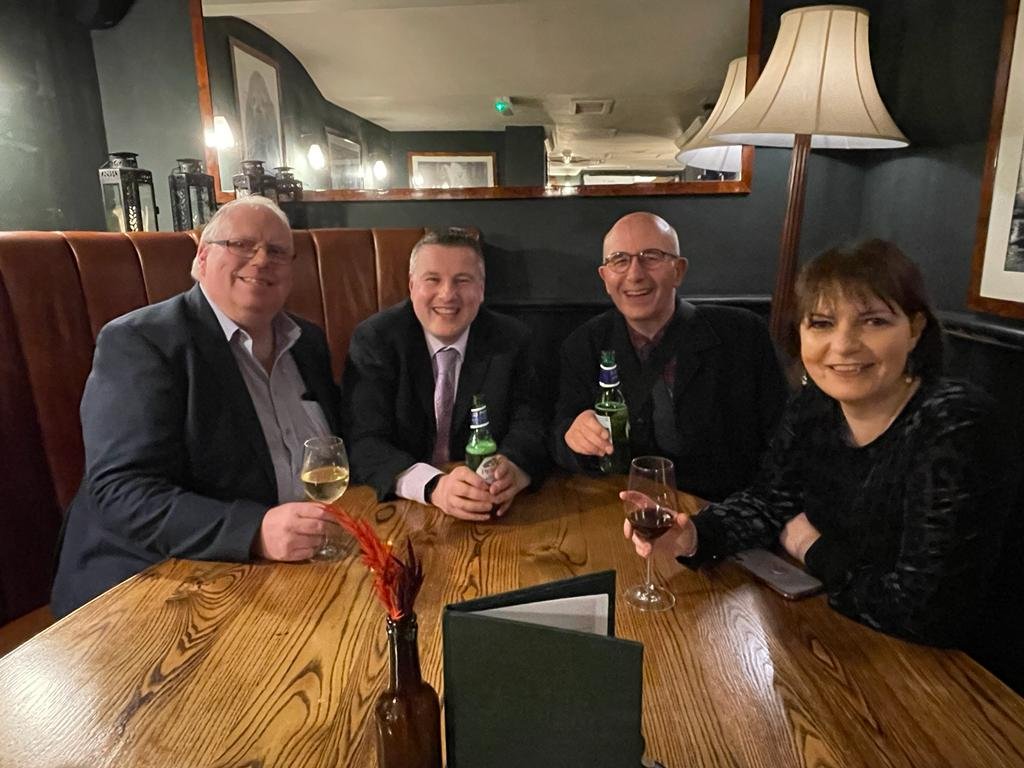
Steve Boden and Mark Thorburn 2022

Steve and Mark at the press night of wycombe swan’s cinderella in 2022

“Long, long ago, in tweenie times of yore, imagine, if you will, a tell-tale time when a wish was made.” Young Stephen Boden dreams of becoming a professional pantomime producer.

 Every year he visits the pantomime at the Belgrade Theatre in Coventry and strikes up a friendship with co-writer and dame extraordinaire, Iain Lauchlan. Iain and his co-writer and panto side-kick, Will Brenton, took over the Belgrade pantomime at Christmas 1989 and after a few years decided to buy the panto productions from the Belgrade and start their own company, Tell-Tale Theatre Productions, hiring sets, costumes and props initially, but with a view to producing panto productions of their own going forward.

Fun Song Factory was one of their television creations for the younger audience and, during Belgrade panto runs they created the television phenomenon, Tweenies. Being so busy with that ‘little’ project at Elstree Film Studios in Borehamwood, they need someone talented and enthusiastic to head up their new pantomime production company. Who better than Steve Boden?

They housed the sets they had accumulated in a local farmer’s large barn outside Banbury, each year requiring singular maintenance from the chirpy visits of local birds nesting in the eaves. From May 2000, they also rented a small industrial unit on the Beaumont Industrial Estate (no.10, ominously - prime) in Banbury, to house an office and store costumes. Basic beginnings.

Initially the business was set and costume hire, and when I joined Steve, part-time from November 2000 he was busy talking and taking every opportunity to network in the theatre world, looking for hire customers and production opportunities. Even at this relatively early stage he was hiring an entire production, including script, for a fifth year to the Roses Theatre in Tewkesbury. He had made a smaller, but duplicate Belgrade set for Jack and the Beanstalk.  There were now three animatronic giants and an early non-animatronic version, more sets from Bristol Old Vic and costumes and props were hired out that year to Boston, Cambridge, Truro, Croydon and Dunfermline.

By the summer of 2001 it was obvious that if the expansion was to continue apace, then bigger premises were required. With full military precision, Steve organised the big move from Banbury to a new home on Little Heath Industrial Estate in Coventry. For five days, Monday 20 to Friday 24 August 2001, two 45 foot Luckings (theatrical removals stalwarts) trucks journeyed between Banbury and Coventry clearing the unit and the barn into their new home. A team of seven was split to fill a truck in Banbury while Steve organised the unloading and logistics of the layout in Coventry. By Friday afternoon 95% of the barn was empty.

The Unit at Little heath which was the home of tell-tale / wish / imagine from 2001-2012

Paul Hulston, who had worked at the Belgrade building sets, had decided to set up his own scenery construction firm, PGH Scenic Workshop, and needed premises. He hired part of the new large unit, so was ‘on-hand’ to build full or part pantos as required and on site. A smart move for both businesses.

Will Brenton, a long-time friend of Susie McKenna, the Hackney pantomime writer and Director for twenty-one years from 1998, got Tell-Tale involved with Hackney Empire during their £20 million refurbishment. Steve steered two Christmas productions of Iain and Will’s television classic Fun Song Factory into the Hackney Empire studio The Bullion Room as the main theatre was full of builders.

We remained involved with Hackney after the re-opening with the provision of much of the physical production of their pantomimes with former Belgrade Theatre panto sets, until they were able to produce their own. Susie McKenna successfully wrote and directed them for 21 years.

Poster for Dick Whittington at Blackfriards Arts Centre in 2002

Dick whittington at blackfriars arts centre in 2002 was steve’s debut as a panto producer and director

Steve’s powers of persuasion brought Susie onto the Tell-Tale stage in Hounslow. He was approached in August 2002 (only 2 weeks before his wedding to Sarah) by the Paul Robeson Theatre to provide a pantomime, late in the panto day, so he called in Susie, who re-wrote the Belgrade script for a smaller company, directed and played villain herself with West End friends experienced in panto. The relationship with Susie McKenna continued successfully with a showcase of Iain and Will’s compilation musical Funkenstein which played at Hackney in May 2004. I got to operate a follow-spot in a number one, Grade II listed theatre for a professional performance. We were few, but we were versatile under Mr Boden in those early days!

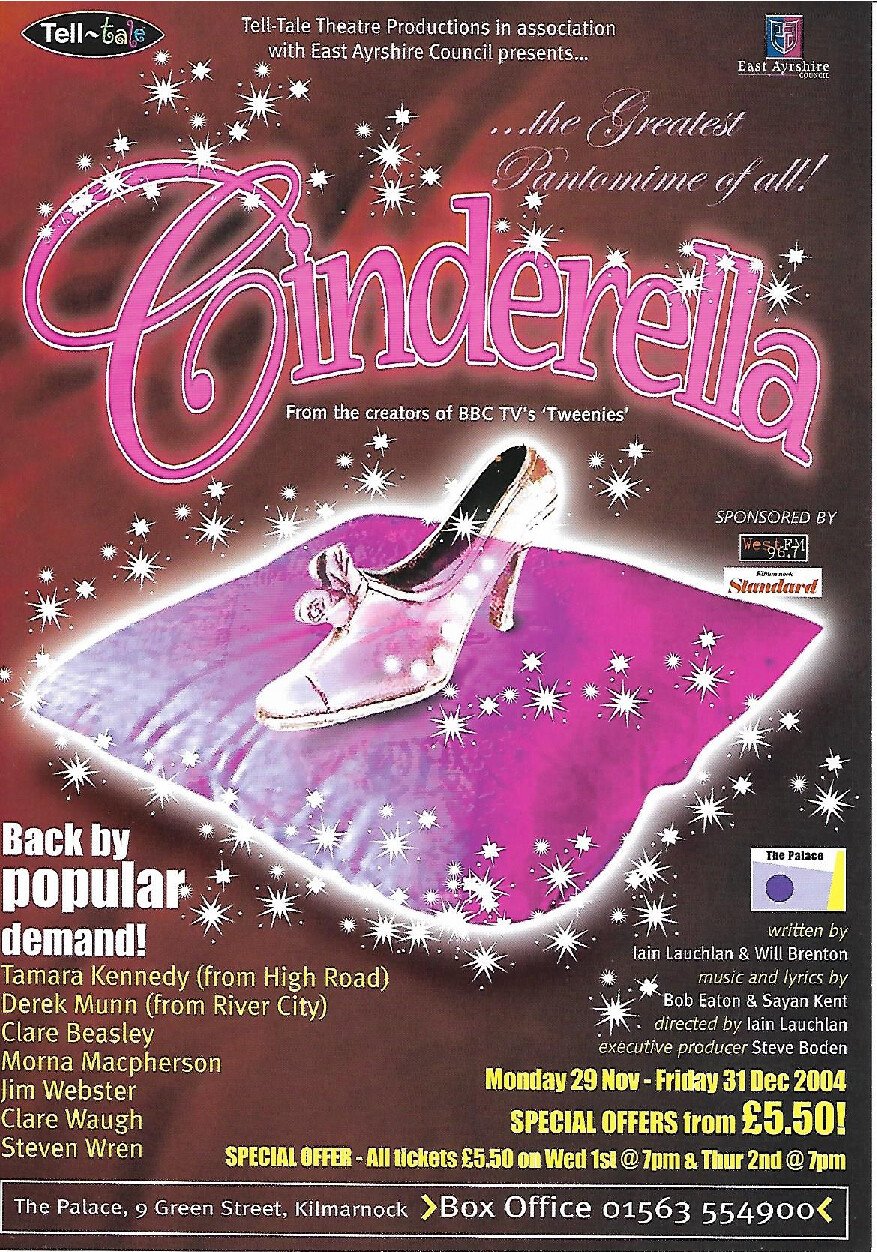
Whilst in Hounslow, I hosted a visit from Janice Blane (now Gilmour) who flew down from Kilmarnock in Ayrshire to Hounslow (not literally, as it has no airport…come on, panto time!) with a view to booking a Tell-Tale panto for the Palace Theatre, Kilmarnock, a relationship that began the next Christmas and is still going strong. The first of an ever-growing number of pantos in Scotland.

New Year 2001 saw Steve driving a small truck all the way from Coventry to Truro to retrieve our animatronic giant, Blunderbore, from Hall for Cornwall where Wayne Sleep was playing Dame. Sitting in the front row at the last performance very near the steps, ‘she’ chose me as her ‘boyfriend’ and bantered with me throughout the performance. I was spared the on-stage humiliation but was given a gift-wrapped tube of Rolos as a thank you, to keep us going on the journey back to Coventry.

Blunderbore also began a five-year relationship with panto stalwart Christopher Biggins. He was starring in Jack and the Beanstalk at Cambridge Arts Theatre, so we snuck a cheeky viewing to ensure that all was well, to be welcomed by name from the stage by Biggins in his Groups and Birthday Welcome List! This continued throughout his hirings and even now, long after the contracts ended, if we meet Christopher in the West End as everyone does tend to do, he always says hello. What a memory for faces and what a very special (panto) person.

The small town of Boston in Lincolnshire, surprisingly, became rather important to Tell-Tale. The 233 seat Blackfriars Arts Centre has an untouchable rear stage wall which is part of the building next door from where the Pilgrim Fathers set off for America in July 1620. Here Steve made his debut as a pantomime producer and director with Dick Whittington at Christmas 2002.

It was whilst driving cross-country from a panto matinee in Cambridge to Boston, in the dark and after torrential rain, that we foolishly took the shortcut. Big mistake.  No streetlights out in the country, we turned a corner, and drove straight into what looked like a lake! We couldn’t see where the road went, so we turned back to the main road and made it just in time to see the in-house Cinderella and to be offered the contract for the next Christmas!

At Christmas 2003, I took over as Director at Boston for Aladdin (and 2004 for Beauty and the Beast) as Steve secured and directed at Loughborough Town Hall and so began a very successful ten-year long tenure there.

Beauty and the beast at blackfriars Arts Centre in Boston, 2004

Each year in these early days, Steve and I travelled hundreds of miles each panto season to see our own sets on various stages, to view new sets for purchase or simply to experience the shows of other producers to compare with ours. On a successful trip to Derby Playhouse, we discovered a beautiful and practically sized Cinderella set with a flying coach and horse which Steve simply had to purchase. She has been a showpiece for him (and her subsequent sisters) ever since. Another favourite was the York Theatre Royal pantomimes, where Berwick Kaler was a local, nay national institution as Dame, Author and Director of an hilarious anarchic pantomime, the last night of which sold out in April!

When Tell-Tale Productions was sold to Entertainment Rights in 2005, theatre productions was part of that deal, so the contracted pantomimes that year had to be produced under a different name, and on 13th May 2005 WISH Theatre was born.

WISH Theatre was an acronym for the names of the 4 company directors – Will, Iain, Steve and Helen. When Steve and Sarah bought their business partners out to take full ownership of the company on 1st April 2009, the W, I and H we no longer part of the team, so they set about choosing a new name – and in a flash WISH was renamed as Imagine.

I moved on in 2006. I did, however, get to return as Director with Imagine in my hometown of Royal Leamington Spa in 2011 (Sleeping Beauty) and 2012 (Snow White).

Poster for Cinderella for The Palace Theatre Kilmarnock’s 2004 production.

Those early years were ‘small’ by comparison with today, but we beavered away, helping Steve develop and grow the company and were delighted when new venues came on board and ever evolving scripts were adapted to suit each venue and each town. It was almost like the ‘warm-up’ for Steve. He became Imagine and look where the next 18 years took him and his team.

When I created the programmes for those early pantomimes, the introductory page ended with the Tell-Take philosophy, which I quote here, as I think it still sums up Steve’s work today. Just bigger. Congratulations on your Imagine 18th, Steve and team Imagine. It was great to be a part of it along the way. Thank you.

“A Tell-Tale pantomime aims to be a traditional, good quality spectacle. Casts are made up of strong, capable actors who have good contact with their audience. Above all Tell-Tale creates a dedicated team including writers, directors, technicians and performers who have a good sense of fun. Now all they need is YOU the audience to join in and enjoy (as loudly as possible, please…..)”

 Mark Thorburn (Tell-Tale Theatre Productions / Wish Theatre 2000 to 2006)

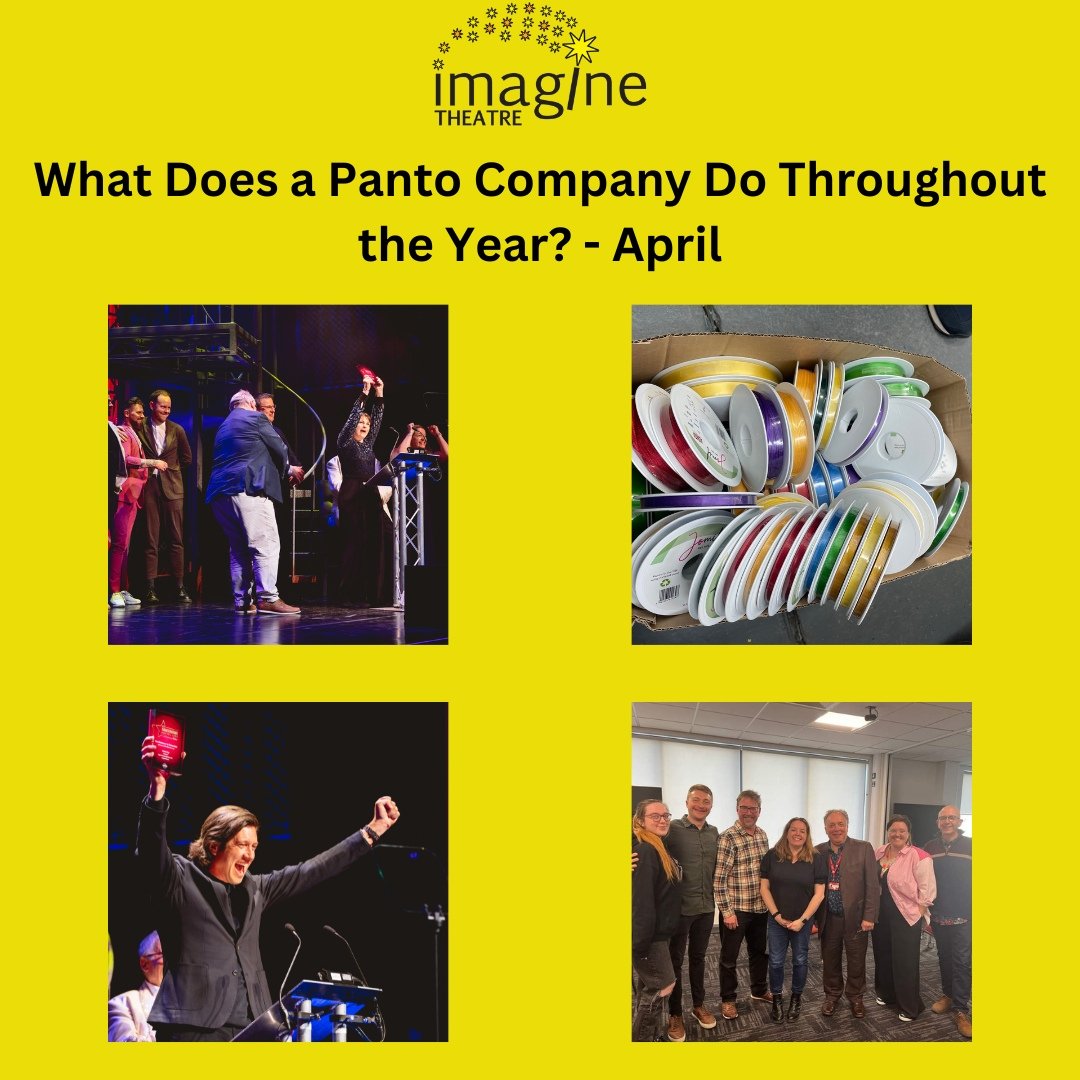
What Does a Panto Company Do Throughout the Year - April

Continuing our blog of what a pantomime company does ‘for the rest of the year’ here is a brief overview of what the Imagine team have been up to during April.

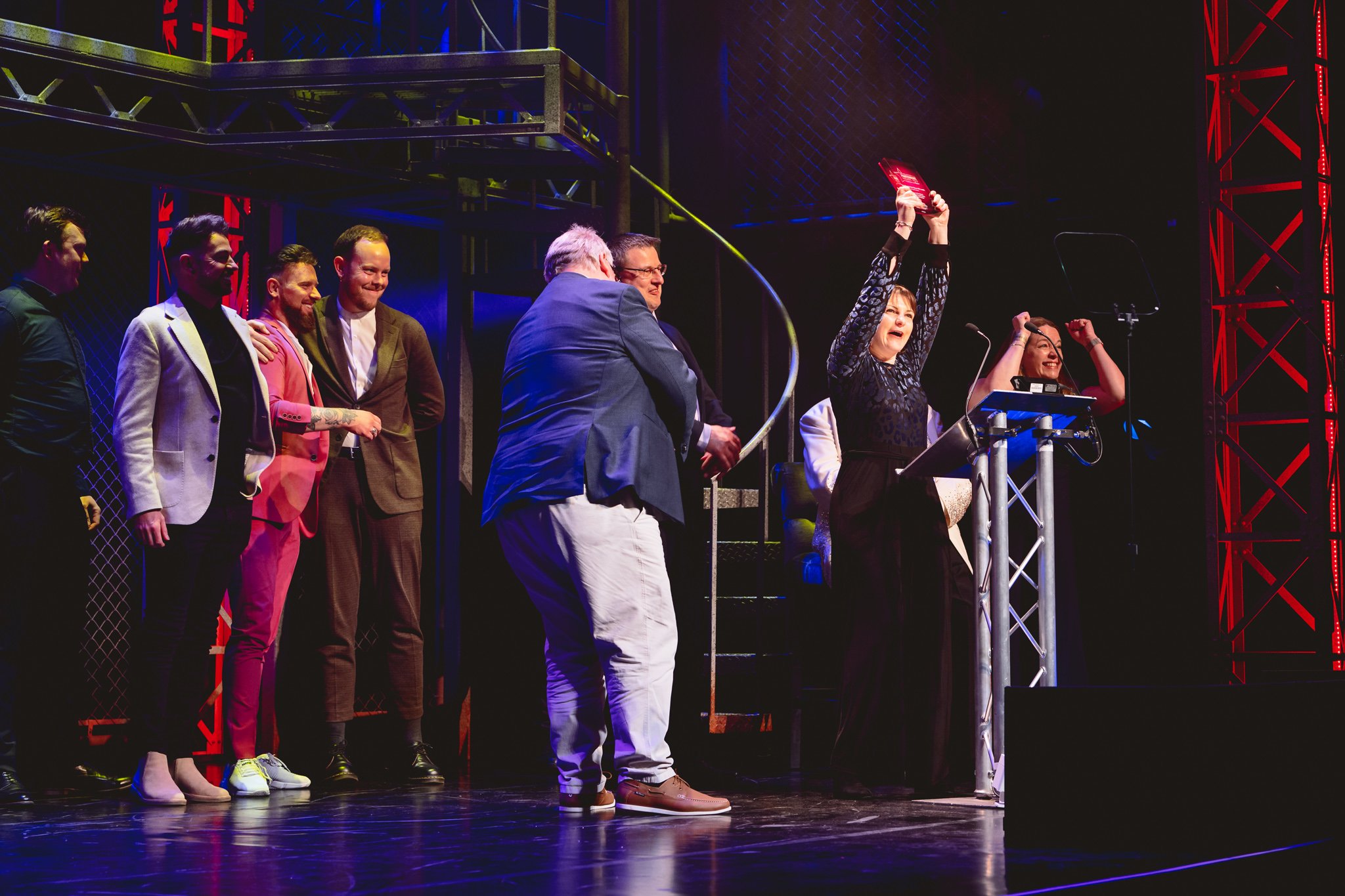
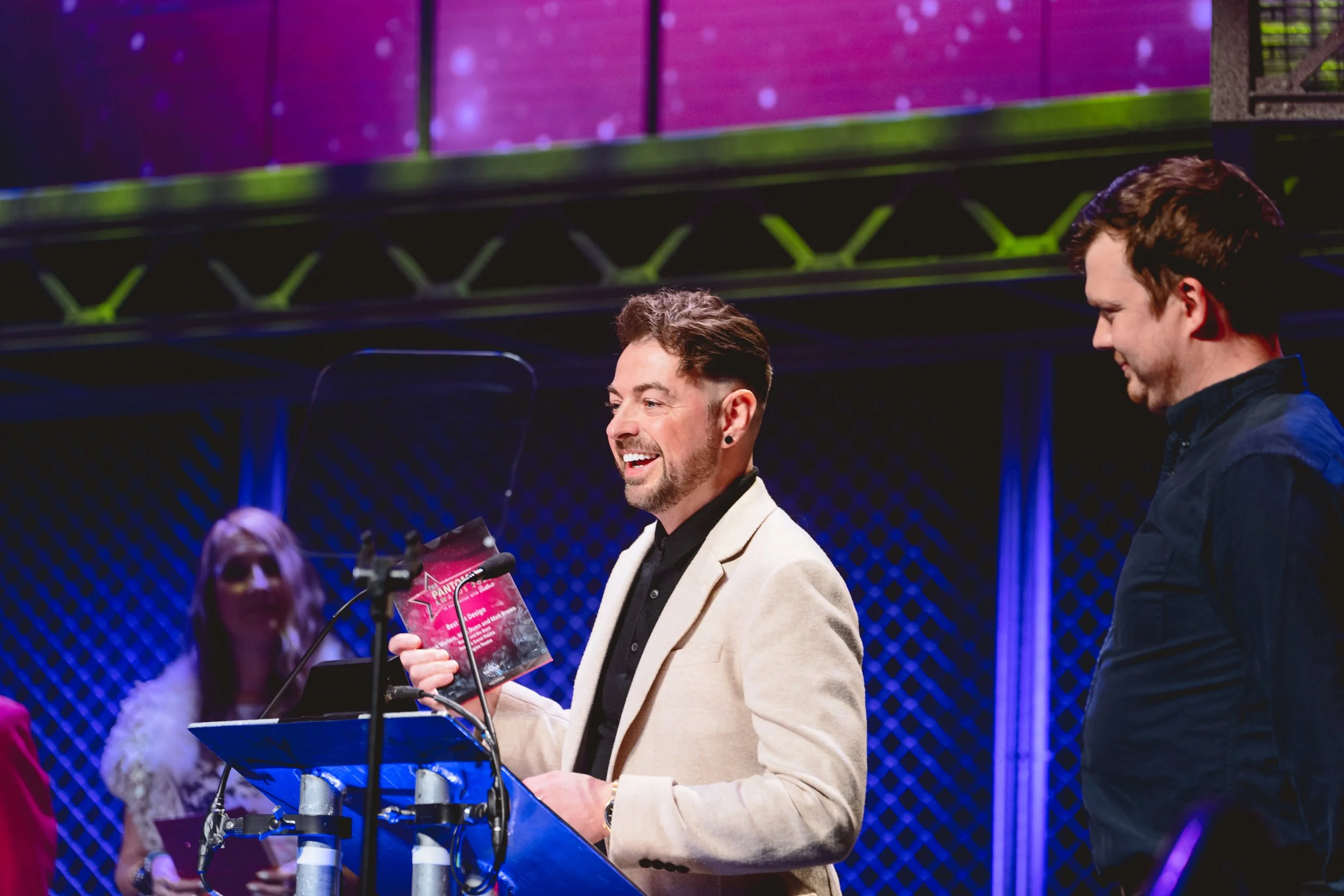
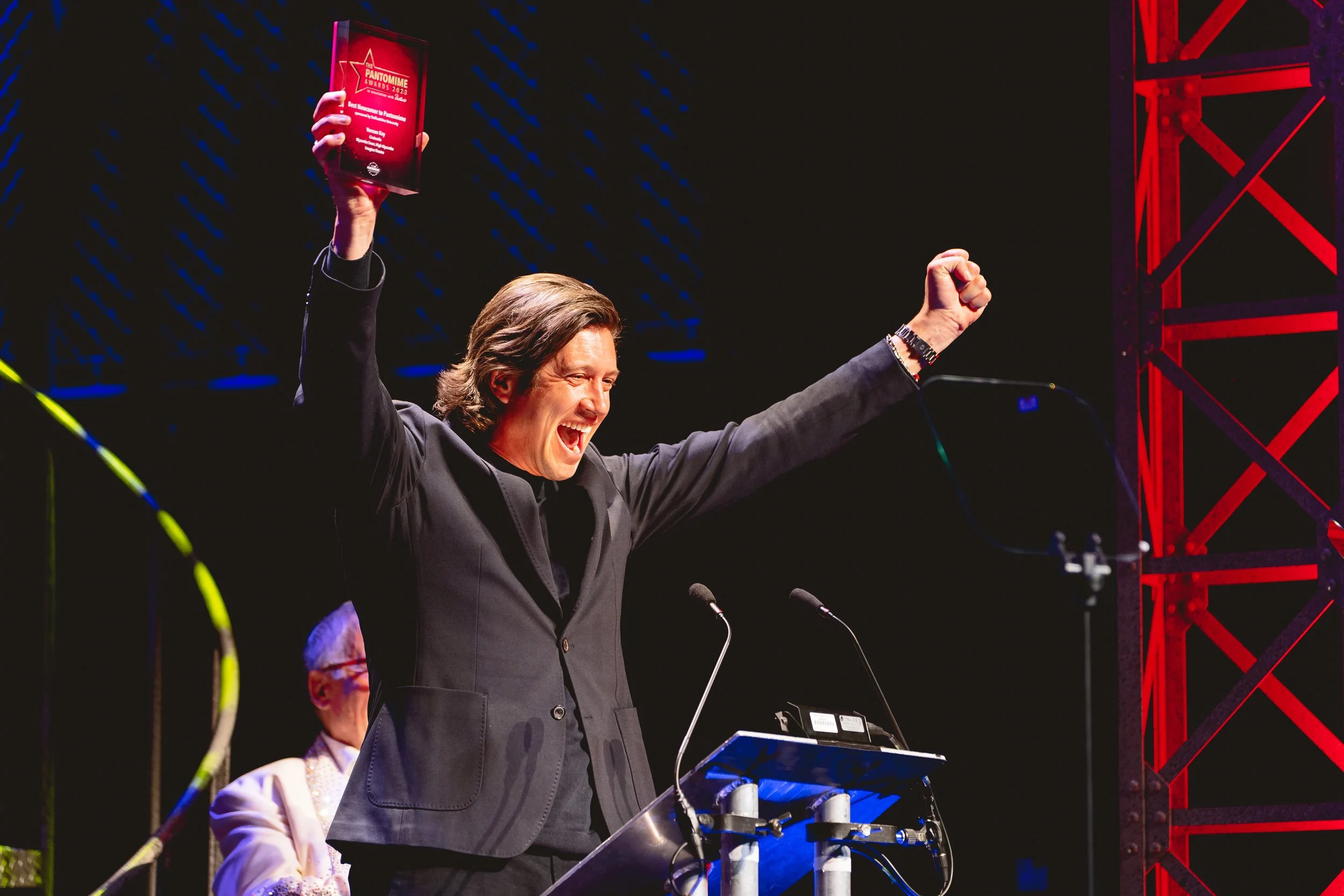
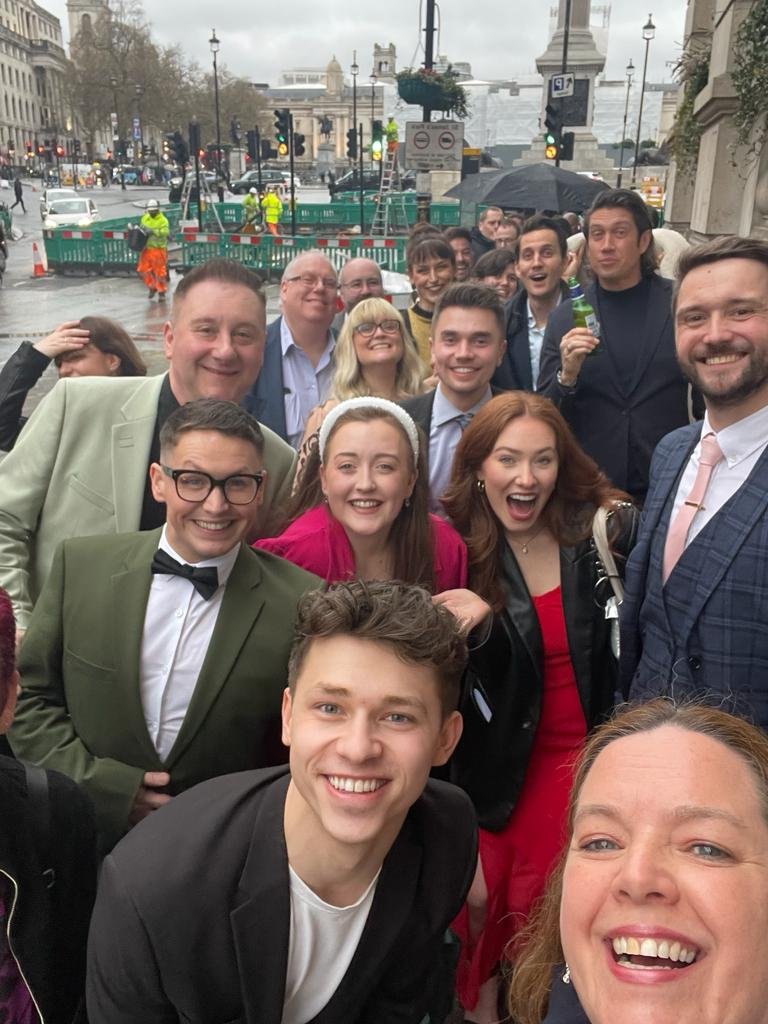
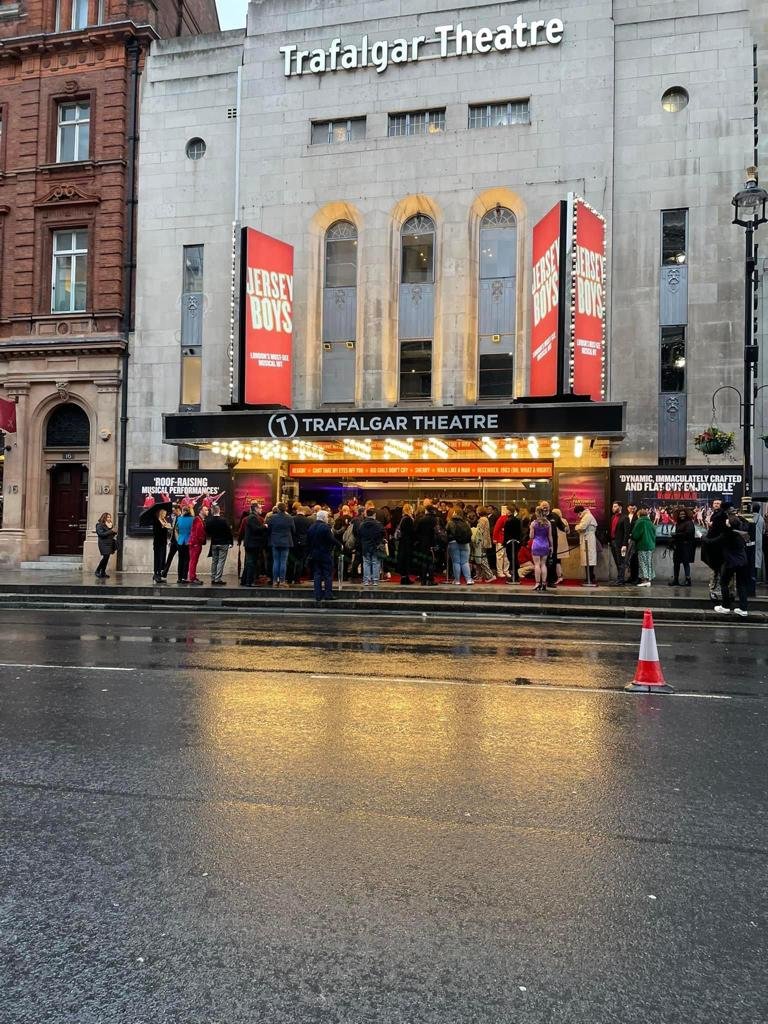
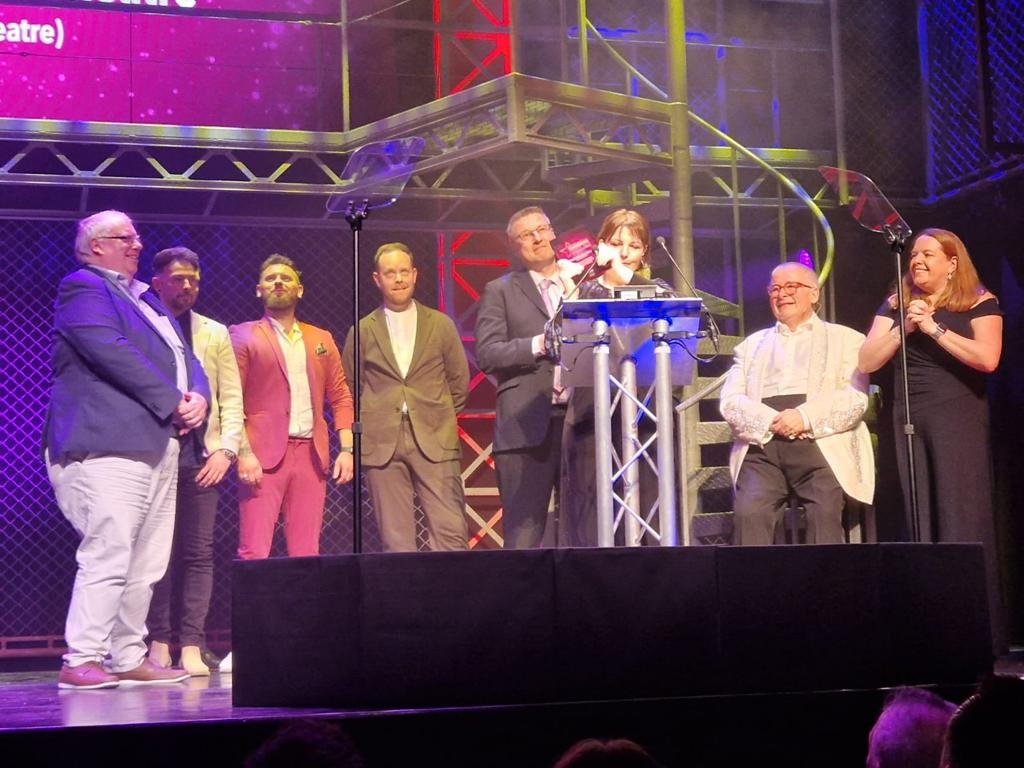
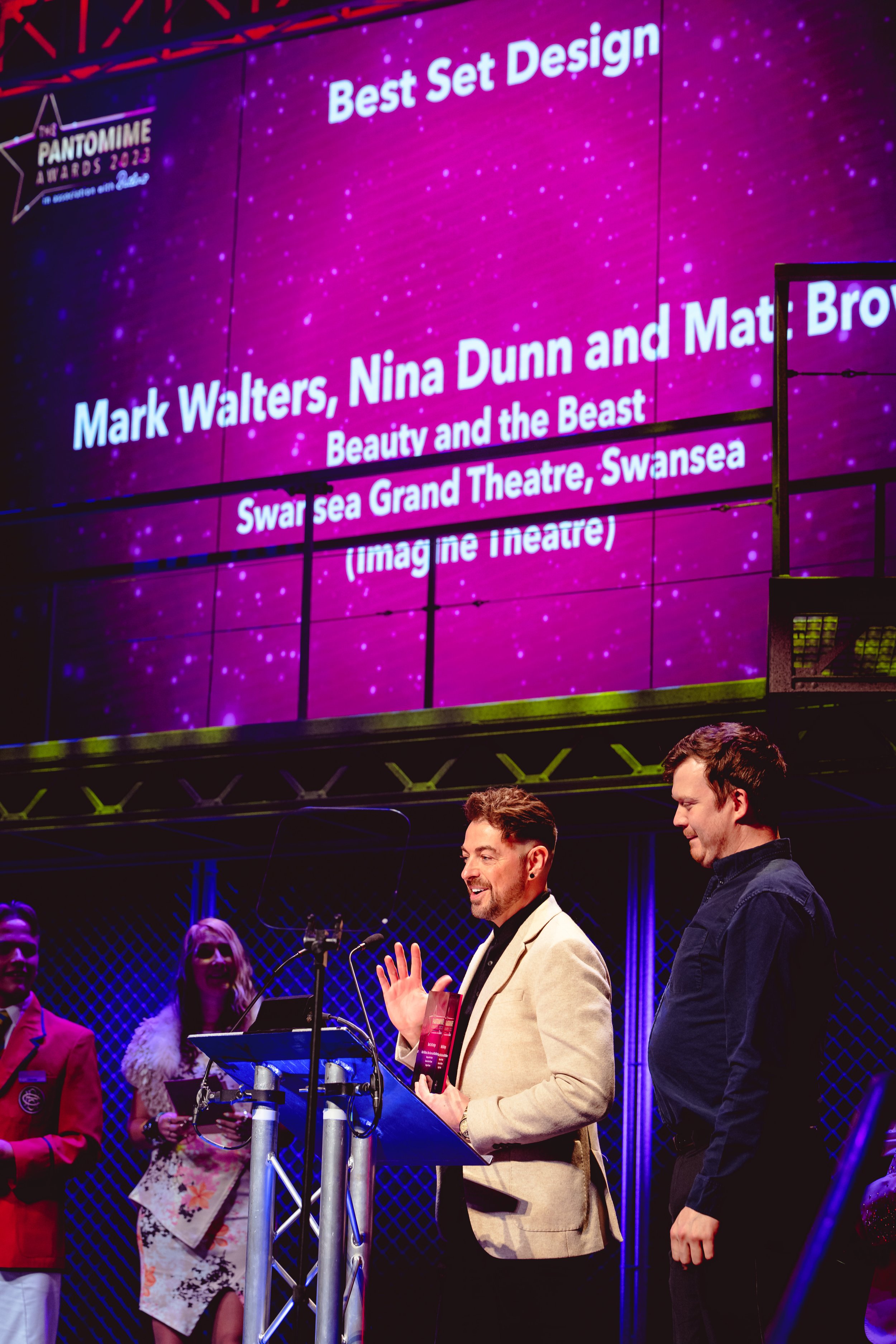
This month saw the UK Pantomime Association Awards at which Imagine won for Best Production (over 900 seats) for Swansea’s Beauty and the Beast, with the production also picking up the award for Best Set Design. In addition Vernon Kay won the award for Best Newcomer to Pantomime for his portrayal of Dandini in Wycombe Swan’s Cinderella. Many of the Imagine team, along with some of those who worked with us on the 2022 season, were in attendance on the night to celebrate the panto genre at the fabulous ceremony held at the Trafalgar Theatre in London’s West End. It was great to catch up with so many friends and colleagues and the wider panto community and we would like to congratulate all the nominees and winners and thank the UKPA for a fabulous evening.

With Imagine’s 18th birthday coming up in May the marketing team are planning a week-long celebration on social media of the last 18 years. There will be blogs, podcasts and lots of fabulous photos from throughout the company’s history so make sure you keep an eye on our social channels during the second week of May and also please take a look at our post on how you can get involved.

The ops team have spent a few days away from HQ at the Royal and Derngate in Northampton hanging and photographing almost 80 of our new cloths from the last two years.

The Associate Producers for each of our shows are currently in the process of getting the first round of production meetings of the season booked in. These incorporate key members of the creative teams for each show and in house venue staff. With so many pantomimes this year diaries are filling up fast!

In the wardrobe department Esther has been busy working her magic creating and maintaining some beautiful wigs. The other members of the wardrobe team have been embellishing and revamping some of our ensemble costumes and the team were very excited by a large fabric delivery full of gorgeous brightly coloured fabrics which will be used to create costumes for the season ahead.

Sarah was invited to Staffordshire University to talk to the students on their MA in Contemporary Pantomime Practice course. She gave a business focused presentation from the producer point of view to guide them through key elements such as the importance of scheduling, setting ticket pricing, budgeting and cashflow amongst other things, and explaining to them why, for a producer, panto is a year-round job.

Martin Ballard, the host of our podcast, also dropped by to interview Beth who oversees the children’s licensing for a forthcoming episode of the Just Imagine podcast as well as interviewing Steve and Sarah for some other forthcoming episodes, including one to mark our 18th birthday celebrations.

If you are interested in a further look behind the scenes check out the fortnightly Just Imagine Podcast which as well as interviews with the members of the Imagine HQ team includes guest interviews from the wide range of people we work with each year.


What Does a Panto Company Do Throughout the Year - March

Continuing our blog of what a pantomime company does ‘for the rest of the year’ here is a brief overview of what the Imagine team have been up to during March.

This month has seen Head of Wardrobe Dawn return from maternity leave and so our fabulous wardrobe team are now back to full strength and are busy planning for the season ahead.

Artistic Director Eric and Head of Casting Louise have been getting some of the creative teams and returning cast members in place for this season’s shows. In addition Eric has been liaising with our writing team over the scripts for this year as well as creating first drafts of those he is writing.

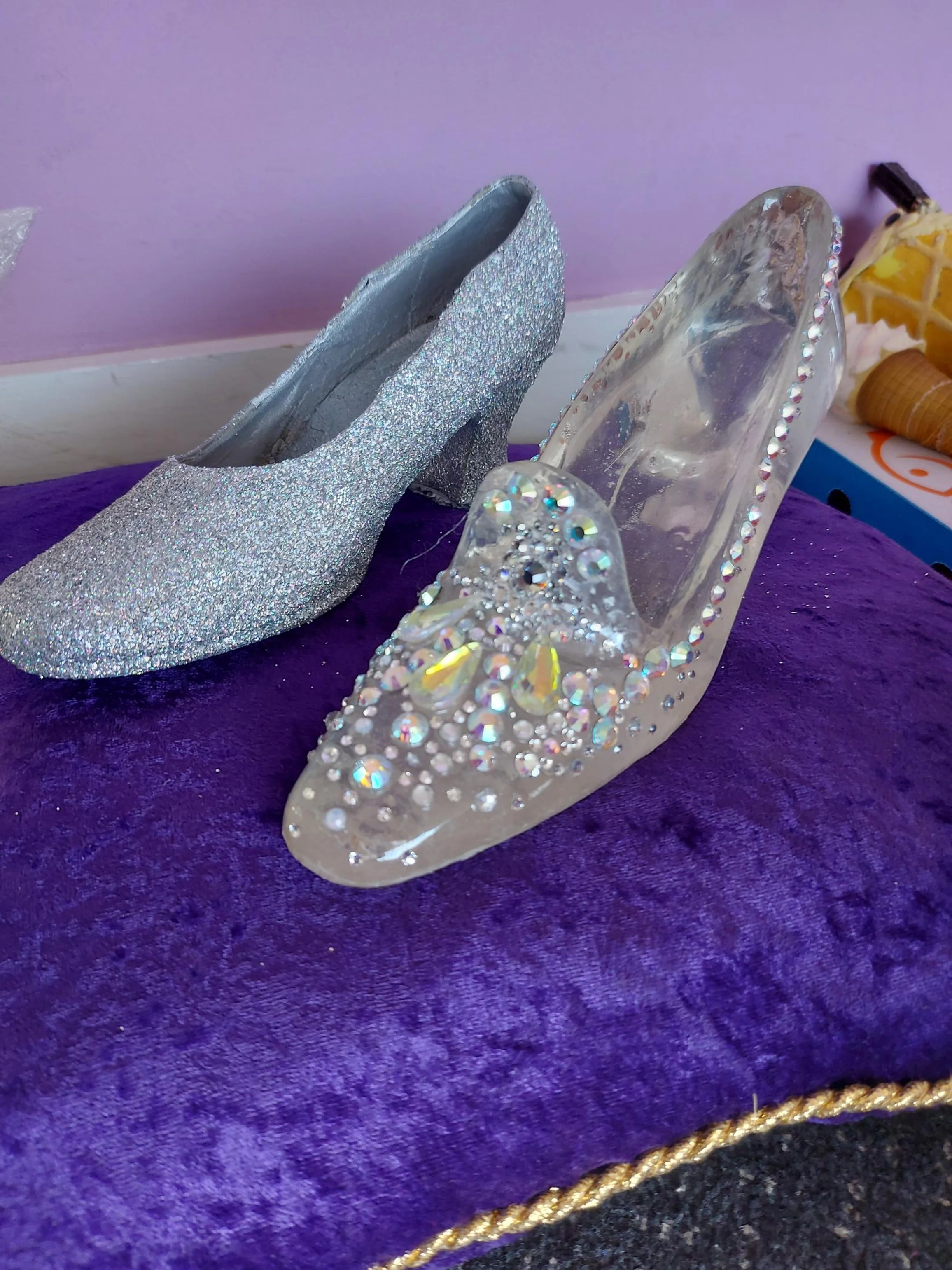
The final week of March saw the first photoshoot of the 2023 season and many of the team were working hard in preparation. The wardrobe team carefully selected and prepped the costumes, shoes and wigs and Katie and Emma from the marketing team had a guided tour of the props floor from Ruth and had a lot of fun coming up with new ideas for social media and selecting the props. The wonderful Ruth and Anna also created some very special and glittery additional bits for the shoots this year. The shoot day itself was a lot of fun with some familiar faces joining us for a lot of merriment alongside the hard work of getting all the photo and video content that was needed.

With the financial year end Sarah and the accounts team have been very busy reconciling the accounts from the past financial year, checking and double checking everything has been correctly coded to each show.

Beth in the Child Performance Licensing department has been creating all the info sheets and application forms for the Junior Ensemble auditions. All the dates are now on our website, with the first ones happening in June, so please take a look at our Junior Ensemble page for further information – www.imaginetheatre.co.uk/childrens-auditions. The page has a run down as to how our audition days work and there is also a video and a podcast with further insight into the process.

If you are interested in a further look behind the scenes check out the fortnightly Just Imagine Podcast which as well as interviews with the members of the Imagine HQ team includes guest interviews from the wide range of people we work with each year.


What Does a Panto Company Do Throughout the Year - February

Continuing our blog of what a pantomime company does ‘for the rest of the year’ here is a brief overview of what the Imagine team have been up to during February.

Although many of the team take the opportunity to have a well-earned break in February, things have still been exceptionally busy at Imagine HQ.

Many of the companies that we hire sets, props and costumes to produce their pantomime during January and February and so the last few weeks have seen the majority of the set and costume hires for the 2022-23 season come to an end. The warehouse, wardrobe and props floor are once again full.

This year our warehouse is home to 5 new sets. The stores team have been logging all the new sets onto the system. They have to measure and photograph each piece of every single set.  Each individual piece of set has its own label with a barcode which is linked to a central system along with the photo and measurements. This allows the team to quickly pull up images and information for each piece of set we own. This system is also used to log the sets in and out of our warehouse each season.

The wardrobe team are cleaning all the costumes from the season and doing any necessary maintenance before they get put away. In addition Saeni and Adam have been venturing off around the country procuring some new costumes to add to the collection.

The debriefs with the venue management and the marketing teams are now almost at an end and budgets are getting closer to being finalised.

The casting process has begun with a few familiar faces beginning to be confirmed for this season with announcements and brochure launches imminent for a few of our venues.

In addition, Sarah, Steve and Laura attended the first ever pantomime symposium in London run by the UK Pantomime Association and the team behind the MA in contemporary pantomime at Staffordshire University, along with many of the country’s other top pantomime producers, and other representatives of the UK pantomime industry. It was a fabulous day of thought provoking panels, honest and open discussion about the future of pantomime and a chance to meet up with friends and colleagues from the industry.

The team are delighted that the Just Imagine podcast has now received 6,000 downloads and the schedule for the podcast for the rest of 2023 is already in place.

And finally, the Imagine Team did not forget to embrace the tradition of Shrove Tuesday with Amy making delicious pancakes for the whole team on Tuesday 21 February.

If you are interested in a further look behind the scenes check out the fortnightly Just Imagine Podcast which as well as interviews with the members of the Imagine HQ team includes guest interviews from the wide range of people we work with each year.


Trafalgar Entertainment announces exciting panto partnership with Imagine Theatre

Trafalgar Entertainment announces exciting panto partnership with Imagine Theatre

Trafalgar Entertainment (TE) – the international live entertainment business founded by Sir Howard Panter and Dame Rosemary Squire – has announced details of an exciting new partnership with Imagine Theatre – one of the UK’s biggest pantomime providers.

Read More

Why there are no Junior Ensembles in many of our Pantos this year

For us, panto is all about family and it’s all about children. It was our own experiences of watching or being in pantos as children which shaped our desire and passion to work in the world of theatre and pantomime. That’s why we work so hard to create as many opportunities for children to perform in our productions as we possibly can.

But for now, whilst our shows are still planned to run as normal, COVID has sadly put a pause on children appearing in many of our shows, and we wanted to explain why.

Throughout the pandemic, everyone’s focus has been on health and wellbeing, and as we move into what we all hope are the latter stages of this crisis, that doesn’t change. Our absolute priority is the wellbeing and health of everyone who will work on, be involved in, or watch any of our productions this year.

A huge amount of work is going on behind the scenes to deliver a spectacular pantomime season this Christmas, but as we are sure you will appreciate, there will be some amendments and changes which must take place due to the current situation.

A very wise dance teacher friend of ours once said to us “never dance on an injury until it has fully healed.” We see COVID as a very similar thing – we can’t just ‘flick a switch’ and this will all go away. There are aspects of our pantomimes which can and will be back this year, but other parts require a little more ‘healing’ time until they can safely return, and our junior ensemble is one of those.

Pantomimes take many months to plan and develop. It takes around 17-months from the start of planning a show until closing night, and each element of the production is meticulously planned. This includes the casting and inclusion of children for our junior ensembles.

The pre-planning and up-front work that takes place before the audition days is enormous. We must plan rehearsal and performance schedules (including working out school time missed), undertake the interviewing, recruitment, and reference checking of chaperones, planning of performance licenses, obtaining DBS and PVG checks, updating safeguarding procedures and policies and then the administration set up and roll out of the actual audition days themselves.

Every year, we audition many thousands of children the length and breadth of the UK. Of these, many hundreds are offered the chance to appear in one of our productions. We also work with dozens of chaperones, all of whom take care and responsibility for these talented young people. The children appear in teams of either eight or ten in each production (some shows have 2 teams, some have 3, meaning we cast between 16 and 30 children per production), accompanied by at least two chaperones.

Once the auditions are completed, this is then followed by weeks and weeks of work in obtaining performance licenses for those who have been successful (as every child appearing in the show must be granted a license by their local council to perform), the fitting of costumes and all the background work we have to undertake, including preparing chaperone files, reports and so much more.

This year, in addition to all our usual preparations, things are just that bit more complicated. There are so many elements we must consider what would never usually factor. For example

  • What are the rules and regulations we would need to follow at audition days? Sometimes with all the auditionees and adults accompanying them, plus the Imagine and venue teams we can have upwards of 500+ people present in the audition buildings at any one time. Whilst unlocking is moving forwards well, this is still a huge amount of people to hold in one place, especially as some parts of the UK (Scotland and Wales in particular) may only just have fully unlocked when their auditions are due to take place.

  • Will we be able to even obtain licenses for children to be released from school for rehearsals and performances when they have missed so much schooling due to the pandemic? Some children may have missed weeks of schooling and the authorities may take the decision not to issue licenses to allow them to miss school for rehearsals and performances.

  • Will children still be in bubbles at school? How do we bubble our junior ensembles when they all potentially come from different schools and different year groups? Current indications are that the bubbles may be removed, but not for all parts of the UK and we still await full guidance.

  • How long will the licenses take to obtain when so many council staff are working from home or are only just returning into offices? (We have been warned it may take up to 4 weeks longer than usual in some locations, making it impossible to have them granted in time.)

  • Will there still need to be social distancing backstage? Or even if the rules state not, will we opt to keep it in place? Many theatres have extremely limited dressing room space with cramped backstage corridors and tight stage wing areas. As such it would be challenging to socially distance or sensibly separate the casts, crew and junior ensembles. The junior ensembles tend to share one dressing room, making social distancing impossible.

  • The children will be mixing with potentially thousands of other children every day at school, and at the time of writing this, schools have been where the virus is spreading the most. Without any government backed cancellation insurances, should one of the children pick up COVID at school, and come to the theatre, this would impact on others within the production and may affect the running of the production. Whilst we know that fully vaccinated adults almost certainly won’t have to isolate, there is currently no clarity around potential vaccinations for children, how isolation might work for them, what the rules are moving forward and how all of that might affect the show.

  •  As part of our risk management, we have to consider the production as a whole from a health and safety and financial perspective. At present there is no clarity around a government backed cancellation insurance scheme to enable productions to continue should any performer or worker have to leave at short notice due to either a positive test or being requested to self-isolate. Therefore, our priority has to be to keep the production itself up and running, minimising risks to backstage staff and performers by keeping the number of people working on the show to an absolute minimum.

  • Finally, we have to consider ‘costume sharing’. Whilst children have all their own underwear for the show, they do share their main costumes. With the current situation, we have to consider this and the impact of it.

Our problem is that we can only work with the information we have at any one time. At the time of writing this blog (early August 2021) whilst theatres in England are reopen at full capacity and we are also starting to see reopening’s in Wales and Scotland there are still so many unanswered questions, and we have to make certain decisions now. So, in short, what that means is time has run out. We just don’t know what the rules and regulations we’re going to be working with are, and how to safely get children into the show. Therefore, it’s impossible to prepare and be ready in time.

Bearing this in mind, and after lengthy discussion and careful consideration with theatre managements, we’ve had no option but to make the heart-breaking decision not to feature young performers in many of our 2021 Imagine Theatre pantomimes. It’s not a decision we’ve taken lightly, and one which is playing very heavily on our hearts and minds.

We are so sorry, as we understand the impact that this will have and how many disappointed children there will be this year.

We promise that, as soon as things get back to ‘normal’, children will return to our shows. We can’t wait to see lots of smiling, excited faces at our next set of junior ensemble auditions. Watch this space!

With very best wishes,

Sarah and Steve Boden

Imagine Theatre

20210504_120709918_iOS.png
 

FIVE STAR CASTING FOR WOLVERHAMPTON GRAND THEATRE PANTOMIME, CINDERELLA!

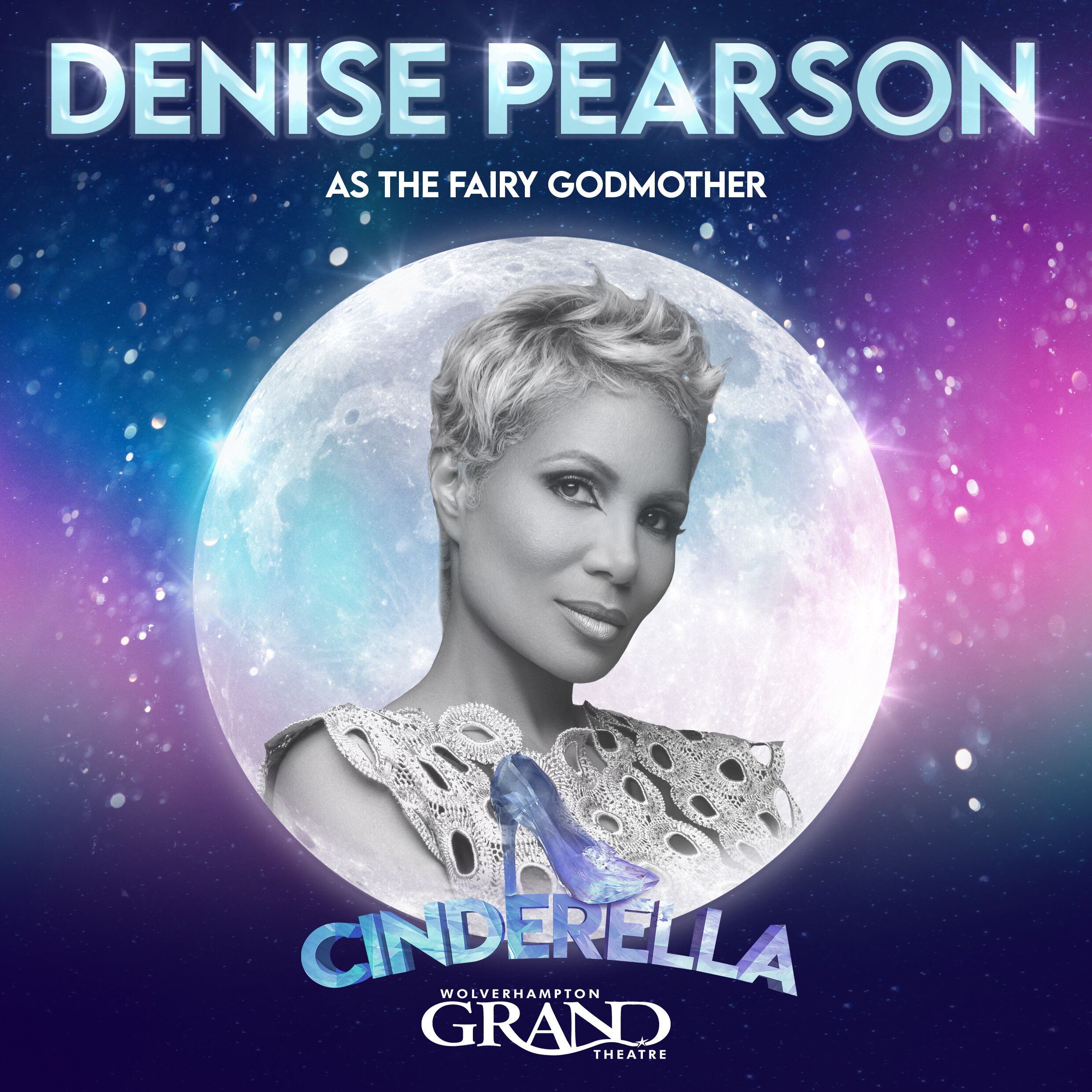
Wolverhampton Grand Theatre announced more magical casting for this year’s pantomime, CINDERELLA! Playing the title role of Cinderella is Kingswinford-born CBeebies presenter Evie Pickerill and Five Star’s lead vocalist Denise Pearson joins the cast as the Fairy Godmother.

Denise and Evie star alongside the previously announced AJ and Curtis Pritchard as Prince Charming and Dandini from Saturday 4 December 2021 – Sunday 9 January 2022.

Having grown up in Dudley, Evie has fond memories of Wolverhampton Grand. She performed at the theatre in her school days with West Bromwich Operatic Society before training professionally. On her return to the Grand and her first pantomime role, she said;  “I’m so happy to be in my hometown for Christmas! Panto is always such fun, but to be performing in front of family, friends and locals is a dream come true. I have been on the Grand stage once or twice before as a teenager, I was in awe of the theatre back then and can’t wait to feel the same butterflies again this Christmas”. 

Evie studied BTEC Performing Arts at Thomas Telford school and then moved to Liverpool at the age of 18 to study acting at Liverpool Institute of Performing Arts. During her final year at LIPA, Evie had the idea of putting on the musical Shout. The show was such a success at LIPA, that it transferred to play at that year’s Edinburgh Fringe. The show went down a storm and receiving five star reviews, it was performed again at the Fringe and in 2016 at the Royal Court in Liverpool. Since 2018, Evie has been able to carry on her love of performing, in the CBeebies House and in the CBeebies Presents productions. Evie played Princess of the Clouds in CBeebies Christmas in Storyland (2020) and Juliet in CBeebies Romeo & Juliet (2021).

Denise Pearson as Fairy Godmother.jpg

Denise Pearson is an English singer-songwriter. She was the lead vocalist with the British pop/R&B group Five Star, lovingly thought of as Britain’s Jackson 5, which comprised herself and her four siblings. The group was created and managed by their father, Buster Pearson, in 1983. Five Star had four Top 20 albums and 15 Top 40 singles in the UK, including the Top 10 hits System Addict (1986), Can't Wait Another Minute (1986), Find the Time (1986), Rain or Shine (1986), Stay Out of My Life (1987) and The Slightest Touch (1987). They won the 1987 Brit Award for Best British Group.


Denise said; “I am delighted to be joining the beautiful cast at Wolverhampton Grand Theatre for the 2021 production of Cinderella as Fairly Godmother. I am so excited to see you guys and welcoming in a sense of normality and interactive fun again. Oh yes, we shall go to the ball!”

Adrian Jackson, Chief Executive & Artistic Director of the Grand Theatre said; “I’m delighted Evie Pickerill will play the title role of Cinderella. Evie is home-grown and proudly represents the many performers who started their journey into showbusiness in local productions, right here at the Grand Theatre. She is known to millions of families on CBeebies and will be recognised by our very youngest of theatregoers – many of whom will experience the magic of theatre for the first time this Christmas. In Denise, we have a world-class vocalist and I know she will raise the roof with some great songs. Combined with AJ & Curtis Pritchard, our cast appeals to the entire family and I look forward to welcoming everyone to our very special Christmas pantomime.”

CINDERELLA will be produced by Imagine Theatre, in partnership with Wolverhampton Grand.

The headline sponsor for CINDERELLA will be Dudley Zoo & Castle.

Tickets for CINDERELLA from Saturday 4 December 2021 – Sunday 9 January 2022 are on sale now.  Tickets can be booked online at grandtheatre.co.uk.

#WolvesGrandPanto

A History of Panto

Written by Katie Shilton

Download our PDF resource copy HERE

Many people would consider pantomime to be quite a recent invention, however it has in fact evolved into the art form it is today over the course of a few hundred years. The longevity of pantomime stems from the fact that it is everchanging, and unafraid of adapting to the fashion and tastes of the times which is why the productions we see today feel relevant, fresh and modern. Here we aim to take a look at just how pantomime as we know it came into being.

Commedia dell’arte

Arlechino.jpg

When looking back into the past to find the origins of pantomime most look to the Italian commedia dell’arte which originated in the sixteenth century and was a form of outdoor theatre with performers playing stock, masked characters. These performances were full of music, dance, slapstick style comedy and acrobatics, all of which are familiar aspects of today’s pantomimes.

The actors of the commedia dell’arte were given loose scripts in which the basic scenes and plot were always the same and from this they then improvised the show. All actors had a basic repertoire of phrases, speeches, jokes, declarations of love, angry tirades and so on, dependent on the type of character that they played.  The nature of the commedia meant that only the most talented actors were capable of performing in it successfully. The basic plot of these productions generally revolved around two young couples, who were in love but who were constantly in danger of being separated by an old father or guardian type figure and his friend. These two old men were then constantly having their plans to separate the young lovers thwarted by two greedy, comical servants known as zannis.

Key Commedia Characters

There were many characters in commedia dell’arte. The zannis were probably the most important and it is from them we derive the word zany. There were first zannis and second zannis. The first zanni tended to be smarter and craftier whereas second zannis were less intelligent and far more physical and acrobatic. They were masked characters instantly recognisable to the audiences. Also masked were the old men characters of Pantaloon and Il Dottore.

Arlecchino as he was originally known in the Italian commedia but later known as Harlequin in French and English versions was one of the most famous of the zannis. He was the most acrobatic of the commedia characters, frequently doing cartwheels, flips and somersaults. He also had his own love interest in Columbina.

Pulchinella was another zanni, but he was characterised by malice and selfishness. His name derived from the fact that the character was pot-bellied and hunchbacked which gave him the shape like a young chicken, which is pollicino in Italian. Although he did not survive into panto many see him as the pre-cursor to Mr Punch from Punch and Judy.

Pierrot, another of the zanni, became popular in French commedia. In the French versions he was shy, naïve and sad and usually heartbroken by Columbine’s rejection of him in favour of Harlequin. He was identifiable by his white powdered face in this period rather than by a mask, a tradition still used my mime artists today. It was from this character that the clown developed.

Colombina, or Columbine, was the maid to the young female innamorati. Usually depicted as kind and clever (much like panto heroines of today), she was often also romantically linked with Harlequin. Unlike England during the 1500s in Italy women were allowed to perform on stage, as such the female roles in commedia were mostly played by women.

Columbina.jpg

Pantalone was a wealthy, elderly, paranoid merchant who originated in Venice and was said to be the inspiration behind Shakespeare’s Shylock in The Merchant of Venice. Along with Il Dottore they were intended to be disliked by the audience who would delight in seeing them fooled by the zannis.

The innamorati were young lovers central to the plot. These characters had no fixed names and often there were two pairs of lovers and this led to much confusion as to who was in love with who. Again perhaps Shakespeare looked to commedia dell’arte for inspiration or the plot of A Midsummer Night’s Dream.

Commedia dell’arte gradually spread throughout the continent and an Italian commedia company were part of the lavish programme of entertainment that Robert Dudley, Earl of Leicester, put on for Queen Elizabeth when she visited Kenilworth Castle in 1575. Although it was never as popular in England as on the continent some of the characters from the commedia began to find their way in to English drama on a more regular basis from the late 1600s, probably due to their expanding popularity in France. With France being so close to England it was relatively easy for some of the performers to make their way across the channel to perform in the hugely popular English summer fairs.

With the introduction of commedia characters to the fairs in England the character of Harlequin gained increasing popularity. At this point in time Harlequin did not speak, due to restrictions on the spoken word on stage in France, but engaged in lots of energetic and entertaining dancing and tumbling which delighted English audiences.

The Creation of Pantomime

The word pantomime first appeared on a poster in England in 1717, however this was not pantomime as we know it today. The word pantomime derives from the ancient Greek where a pantomimus, the ‘imitator of all’ was a dancer who played multiple roles within the same production, expressing himself only through movement to the music and telling classic tales from mythology or the ancient writers. I think we would all agree that this bears very little relation to the productions we are all familiar with now, so how did the word pantomime come to be used for a totally different type of production?

When John Weaver produced the above mentioned  ‘pantomime’ in 1717 entitled The Love of Mars and Venus, an ‘Entertainment of Dancing’ it was purely a dance show as described above. However, when a month later he produced a show called The Shipwreck; or Perseus and Andromeda which was billed as ‘A New Dramatic Entertainment of Dancing in Grotesque Characters’ he introduced the commedia characters of Harlequin and Columbine. The general public were confused by the inclusion of these characters in a classical tale and as he had previously used the word pantomime for the first production somehow this word stuck in the mind of the perplexed public and henceforward came to mean any sort of entertainment that involved these type of characters.

Although Weaver is the first to have included the Harlequin character in a production of the classical tales, it was the legendary actor-manager John Rich that really exploited this to its full potential and was instrumental in the development of pantomime.

Rich produced what is considered to be the first real pantomime in 1721 entitled The Magician; or Harlequin a Director. The character of Harlequin was transformed into a mischievous, funny magician as well remaining the love interest of Columbine. Adding the ability to do magic to the character of Harlequin gave Rich the chance to showcase his flair for spectacular. We may think of special effects being a fairly new addition to theatrical productions but in fact the early pantomimes were packed full of spectacle and were a key ingredient in their success. Under Rich sights such as working windmills and fire breathing dragons were very common. In fact so reliant were the early pantomimes on these elements that Tom Dibdin wrote “if the machinery does not work the pantomime must fail!”

These early pantomimes would probably not be recognisable to the audiences of today and were not intended to be watched by children. Originally the productions had serious and comic parts interwoven and very little linking the sections.

Following the death of Rich the form of the pantomime began to change. Although they still contained serious and comic sections these became separated into two distinct parts with the serious part being performed first and the comic part, the harlequinade, after and were linked by the fact the principal characters of the serious part were at the end transformed into the characters that would appear in the second part with a spectacular transformation scene, and this pattern endured for the next century.

It is interesting to note that the word slapstick derives from a prop from the character of Harlequin in the harlequinades. The magical Harlequin carried a sword or a bat which also acted as a magical wand and this had on it a hinged flap which made a slapping noise when he hit something or someone to give a theatrical sound in a similar way in which today we use a sound effect for falls, trips etc. It could also be used to instruct the backstage crew about scene changes.

Also in Harlequin the Sorcerer; with the loves of Pluto and Prosperine we have the first recorded ‘slosh scene’, a familiar sight in many theatre each Christmas these days which was also hugely popular with the audiences of the time.

The Rise of the Clown

Unfortunately for poor Harlequin, the late 1700s gave rise to the popularity of the clown, the most famous of these being the legendary Joseph Grimaldi who made his stage debut aged just two years and four months at Sadler’s Wells Theatre on Easter Monday 1781. His first appearance as clown however was not until 1800.

Joseph-Grimaldi - NPG.jpg

The 1806 production of Harlequin and Mother Goose; or, the Golden Egg, was the production in which the clown finally trumped Harlequin and became the central and more comic figure in the harlequinade, rather than Harlequin himself. Under Grimaldi, the clown became a mischievous, anarchic character who played tricks on people and caused general chaos upon the stage, had great acrobatic ability and was also a master of satire and comic mockery which was loved by the audiences. Harlequin was relegated once more to simply being the love interest of Columbine.

Although the clown spoke very little he performed a number of songs that were hugely popular with audiences such as ‘Hot Codlins’.

Joseph Grimaldi was so popular as a clown that another name for a clown is a ‘joey’ in his honour.

Old Stories For New

A key date in the history of pantomime is 1843 as this saw the lifting of the Theatres Act which had previously prevented any theatre without a Royal patent from producing a show with purely spoken dialogue amongst other tightly controlled restrictions. Pantomime was now free to do exactly as it pleased and it began to incorporate the witty word play, double entendre and audience participation that are so familiar to us today.   

As pantomime developed through the 1800s it took much inspiration from the extravaganzas that were popular at the time, in particular those of James Robinson Planche. An extravaganza was a comic drama, full of satire and music and stunning special effects. Although this may sound similar to pantomime as it is today, at the time they were considered quite different with pantomime being considered a much coarser, lower form of entertainment.  The Athenaeum in 1849 said of an extravaganza in comparison to a pantomime; “This pleasant sort of entertainment which sends light laughter round the theatre and keeps up a continual smile on the countenances of the audience, compared with the coarse exaggeration and vulgar buffoonery of pantomime, is what the raillery of polished wit in a drawing-room is to the rude horse play and ungainly gambols of rustic merry making”.

The 1700s saw a rise in the popularity of folk tales and fairy tales following the publication of Madame d’Aulony’s collection of fairy tales (a term which she originated) Les Contes des Fees in 1697, around the same time that Charles Perrault also published his collection of fairy tales, Histoires ou contes du temps Passe. The early 1800s also saw the first English translation of The Arabian Nights which contained the stories of Aladdin, Ali Baba and Sinbad. Consequently these stories began to replace the classical tales and mythology in both the extravaganzas of Planche and in pantomime.

One of the earliest recognisable titles is Mother Goose in which Joseph Grimaldi appeared in 1806, however this was a very different character and story from which we know today. Mother Goose as we know it did not truly come into being until the legendary panto dame Dan Leno played the role in a version by J. Hickory Wood and Drury Lane manager Arthur Collins in 1902.

One of our most popular pantomimes is Cinderella. Although various versions of the story had existed for a long time it became more popular when it appeared in Charles Perrault’s collection of fairy tales in in 1697. This version which introduced things such as the Fairy Godmother, the pumpkin and the glass slipper was the basis for the 1820 comic opera by Rossini, La Cenerentola, which introduced key characters to the story who appear in panto today such as the Baron and Dandini. Shortly after the opera, the tale was performed at Covent Garden at Easter for the first time as a pantomime. It was not until 1860 that the sisters of the story became ‘ugly’ and Buttons made his first appearance. Much like today the names of the Ugly Sisters were always changeable and altered to refer to topics or people that were popular at the time and the name of the Prince as Prince Charming did not become fixed until after World War One. There is also a suggestion that iconic glass slipper in Perrault’s version came about due to a mistranslation of the French word vair meaning fur for the word verre meaning glass, as in Madame d’Aulnoy’s version Cinderella’s shoes were ‘red velvet braided with pearls’. Whether it was a mistake or a deliberate change by Perrault the fact remains that today the glass slipper is one of the most iconic images in fairy tales and pantomime in the world.

Aladdin’s first appearance as a pantomime was on Boxing Day 1788 at Covent Garden and is taken from The Arabian Nights. The character of the wicked magician did not have his name fixed as Abanazar until a non-panto version in 1813, and Widow Twankey received her name in 1861 and is named after a type of Chinese green tea due the British public’s fascination with the East at this time.

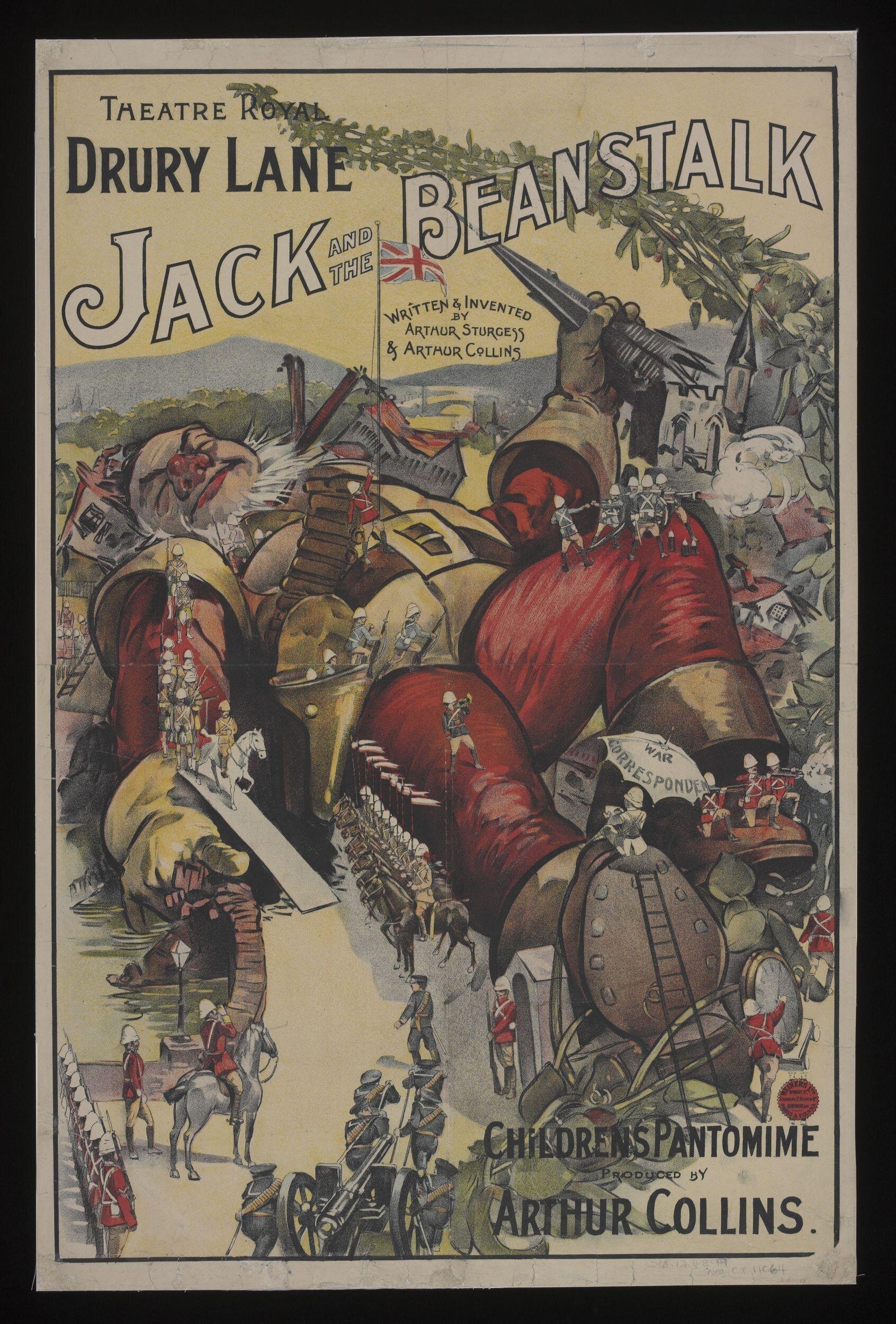
The pantomime version of Jack and the Beanstalk was first performed in 1819. The story evolved from a combination of different folk tales going backs hundreds of years. A reference to the popular Cornish folk tale of Jack the Giant Killer appears in Shakespeare’s King Lear but one of the first written versions comes from a 1734 story The Story of Jack Spriggins and the Enchanted Bean.

The story of Dick Whittington is unusual in that it is the only one apart from the rarely performed Babes in the Wood, that is said to have its basis in fact. Indeed Richard Whittington was without doubt a real person who really did marry an Alice Fitzwarren and was mayor of London four times from 1397. Where the cat came from however is less certain but appeared in stories about Richard Whittington from 1605 onwards. As a pantomime it was first performed in 1814 as Harlequin Whittington or The Lord Mayor of London with Grimaldi as its star. It was in a 1908 production that music hall comedian Wilkie Bard introduced the song ‘She Sells Sea-Shells’, and this established the pantomime fashion of tongue twisting lyrics which is still a feature of many shows today.

From the 1860s onwards the titles of the pantomimes were pretty much fixed and the basic form has changed little since the start of the nineteenth century, however that does not mean that that the genre has not still been changing and evolving.

The Influence of the Music Hall

From the mid-1860s the stars of the music hall began to infiltrate the world of pantomime being popularised by Augustus Harris, the new manager of Drury Lane in 1880 and this influx of well-known music hall performers changed the shape of pantomime forever. Their introduction reduced the plot in favour of popular musical numbers and routines and the harlequinade became shorter and shorter until it has disappeared completely by the 1930s. Music hall stars were the celebrities of their day, much like television actors are now and so the practice of top billed celebrities appearing in panto was born.  The audiences wanted to see their favourite stars performing the songs and routines that they were well known for and so scripts had to be adapted to accommodate this.

There’s Nothing Like a Dame

Dan-Leno NPG.jpg

It was under the influence of the music hall stars that the pantomime dame began to be the star of the show. Cross dressing has been part of theatrical performances for centuries and the earliest ancestor of the pantomime dame can be traced back to the commedia and to the miracle plays of the middle ages and in Restoration comedy it was common to see men dressed as comical old women. Although Joseph Grimaldi often performed as a comical female character in his pantomimes until the turn of the century the dame role in many other productions was often small and the character not particularly interesting. One of the key figures in creating the popular character of the dame as we know it today was Dan Leno.

George Wild Galvin, better known as Dan Leno, was one of the biggest music halls stars of the 1880s. He was known for his monologues and comic songs and his characters were created from his observations on working class people in London, the most famous being his character Mrs Kelly. He played the dame at Drury Lane for sixteen year and his performance as Mother Goose strongly influenced the role of dame from then on.

There really is nothing like a dame. As characters in the commedia wore masks that were instantly recognisable to audiences who were familiar with that character, the elaborately painted face of a pantomime dame acts almost as a mask in the same way – we see a picture of a pantomime dame and even without being told we immediately know what character we are looking at.

Originally the pantomime dame could be played by either a man or a woman and the tradition of the pantomime dame being played by man was not cemented until the end of the 1800s when performers such as Dan Leno elevated the role. Interestingly today we are seeing the re-emergence of the female dame, in particular there is a small but growing trend for the Ugly Sisters to be played by females rather than males.

Principal Boys

Although women had played breeches parts for around two hundred years, this was not a device commonly employed in pantomime until the mid-1800s and this was because until the decline of the harlequinade there were no suitable roles available. However as the ‘openings’ became longer and the harlequinade shorter and roles for the popular female music hall performers needed to be found, women leapt at the chance to take on the role of the fairy-tale hero. In Victorian era England standards of propriety were so high that even the legs of a piano had to be covered. Whereas women in general were forced to wear large uncomfortable floor length dresses a woman on the stage was allowed to show her legs on the proviso she was playing a male role. This gave panto an additional appeal to anyone keen for a rare sighting of female legs!

There is much debate as to who can be classed as the first female principal boy in panto. Many would argue it was Eliza Povey in 1819 playing Jack in the first ever pantomime version of Jack and the Beanstalk who should be awarded this moniker, however she did not also play Harlequin nor would she climb the beanstalk which reached from the stage floor up to the roof. Instead a lad whose job it was to fetch water for horses at the coach station was deemed a suitable double to climb the beanstalk each night and apparently this doubling was never once spotted by the public!  Because of this Madame Celeste is sometimes put forward as being the first true pantomime principal boy for her appearance as both Jack and Harlequin in Jack and the Beanstalk in 1855. However, it was really the music hall stars such as Vesta Tilley and Marie Lloyd in the 1880s that cemented the popularity of a female principal boy.

Vesta Tilley.jpg

The female principal boy faced a decline in the 1950s and 60s as male stars from the music and television world started to take over the role, beginning with Norman Wisdom playing Aladdin at the London Palladium and he was followed by others such as Cliff Richard, Frankie Vaughan, Engelbert Humperdinck and Jimmy Tarbuck. This trend was reversed in the 70s when Cilla Black took to the Palladium stage as Aladdin in 1970. However, over the last two decades we have once more witnessed the decline of the female principal boy.

Skin Characters

Something once integral to a good pantomime were the skin characters. Roles such as the Goose in Mother Goose or Dick Whittington’s cat which see an actor play an animal is known as a ‘skin’ role and animal roles have been part of pantomime since the beginning. Originally any actor could be called upon to play a skin character, even Henry Irving played a wolf early in his career in Little Bo-Peep. These skin performers were once so popular it became a speciality which reached its pinnacle in the mid nineteenth century and one of the most famous skin actors was George Conquest who went far beyond the regular cow, cat and goose we think of today, once performing as an octopus in a suit that measured twenty-eight feet across. Although animals still appear in pantomime today the true specialists have almost died away as there is no longer a call for them for the rest of the year and the roles have reverted back to regular actors and members of the ensemble.

The Modern Era

Following on from empresarios such as John Rich and David Garrick, the first half of the 1900s saw Francis Laidler take on the mantle as the ‘king of pantomime’. A former clerk in the wool-trade industry Francis built the Alhambra in Bradford at the height of the popularity of the variety show which was the successor to the music hall and produced pantomime for half a century throughout the UK. His 1958/59 production of Jack and the Beanstalk with Ken Dodd was so popular it began with them celebrating Christmas and finished with them throwing out Easter eggs as it ran until March.

074_DMH Jack and the Beanstalk_Pamela Raith Photography.jpg

In the 1950s and 1960s one of the biggest names in pantomime production was Derek Salberg who oversaw numerous successful productions from the Alexandra Theatre in Birmingham. Although he employed well known people and speciality acts his pantomimes allowed the inclusion, not intrusion, of these performers, with the emphasis of the production being on its strong storyline.

The pantomimes we see today contain characters, plot devises and routines developed over a few hundred years. Some follow the model of Derek Salberg’s strong story-based pantomimes and are designed to delight and entertain all of the family, whereas others are perhaps influenced more by the music hall and variety era days in which the plot is secondary to the star turns and speciality acts and with more adult humour.

Although panto has changed considerably over the last few hundred years one thing that has not changed is its financial importance to the theatre industry and its popularity amongst the general public. Although not a fan of pantomime David Garrick came to realise as far back as 1750 just how crucial they were to the survival of the theatre industry when having resisted for as long as he could Boxing Day of that year saw him accept that he needed to give the public what they wanted and he produced his first pantomime. From this point on Drury Lane was home to one of the most spectacular pantomimes in the country with a small fortune being spent to ensure it was the best show in town each Christmas. It also helped cement the tradition of pantomimes being performed at Christmas as Garrick held the view that if he really had to do them he would associate them with the frivolity of the Christmas season, rather than with the theatre itself.

Pantomime spread outwards from London to theatres all over the United Kingdom and now almost all regional theatres have a pantomime or some sort of Christmas show playing during December. During 1900s panto gradually faded from being an offering of the major West End playhouses who instead started to house long running block-buster musicals. However, recent years have seen panto return to the West End with the annual panto at the Palladium.

Critics have been proclaiming the decline of pantomime almost since its beginning but after around 300 years it is still a major part of Christmas tradition for millions of families and brings in revenue that helps support theatres throughout the rest of the year and so to those who question whether it is dying out the answer is simple – “oh no it isn’t!” With its focus on family entertainment and ability to evolve pantomime is destined to bring magic to families throughout the United Kingdom for years to come.

155_DMH Aladdin 2019_Pamela Raith Photography.jpg

Sources:

  • Oh Yes It Is!: A History of Pantomime by Gerald Frow

  • www.vam.ac.uk

  • www.bradfordtheatres.co.uk

  • www.its-behindyou.com

 Photos:

  • Arlechino (later Harlequin) and Columbina. Masques et bouffons; comedie italienne by Maurice Sand 1862

  • Joseph Grimaldi. Published by Samuel De Wilde, 1807 © National Portrait Gallery, London

  • Dan Leno by William Davey, published by J. Beagles & Co. © National Portrait Gallery, London

  • John Rich as Harlequin. © Victoria and Albert Museum

  • Poster – Jack and the Beanstalk at Theatre Royal, Drury Lane, 1899 © Victoria and Albert Museum

  • Marie Lloyd. Photographic copy of original 19th century photograph. © Victoria and Albert Museum

  • Vesta Tilley – Photographic copy of original 19th century photograph. © Victoria and Albert Museum

  • All other images copyright Imagine Theatre Ltd